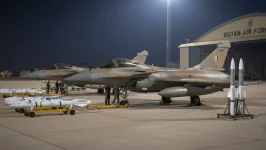
Arming the Dassault Rafale with India's upcoming BrahMos-NG (Next Generation) supersonic cruise missile has become a subject of massive strategic interest.
The BrahMos-NG is a lighter, more compact variant of the original missile, weighing roughly 1.33 tonnes and measuring 6 metres in length, while maintaining a strike range of approximately 290 to 300 kilometres and speeds exceeding Mach 2.8.
While successfully mating this lethal weapon to the Rafale would drastically multiply the Indian Air Force's deep-strike capabilities, the technical reality is far more intricate than simply bolting the missile to a wing hardpoint.
Aviation experts highlight that integrating non-native weaponry onto modern Western combat jets strictly requires access to the aircraft's Interface Control Document (ICD) and critical software backing from the Original Equipment Manufacturer (OEM).
Attempting this without Dassault Aviation's direct involvement presents monumental engineering challenges.
Modern fighter jets are built on highly digitised and interconnected avionics architectures. An aircraft's central mission computer must continuously communicate with any external munition using precise, pre-programmed digital languages.
The ICD serves as this essential translation manual, dictating exactly how the aircraft and the missile exchange critical data such as power flow, targeting coordinates, weapon health status, and launch commands.
Lacking this precise digital blueprint, the Rafale's systems would simply be unable to safely recognise, configure, or release the new missile through its existing networks.
Furthermore, contemporary Western fighters are heavily guarded by software-based safety interlocks. These built-in security protocols are deeply woven into the jet's core mission software to ensure that weapons can only be armed and dropped under rigorously tested and approved flight conditions.
If OEM support is denied or restricted—a reported sticking point in recent negotiations where France raised concerns about Russian engineering involvement in the BrahMos joint venture gaining access to sensitive French software—engineers could theoretically pursue alternative workarounds.
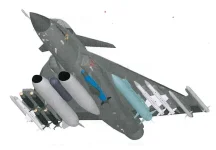
One such method is the creation of a 'smart pylon' or an independent Weapon Management Unit (WMU). In this setup, the external hardware would independently handle the weapon's communication needs without penetrating the Rafale's primary avionics.
Rather than forcibly splicing the missile's software into the jet, this intelligent pylon could manage most firing functions itself while receiving minimal cues from the aircraft.
The pilot could then control the BrahMos-NG through separate cockpit displays or dedicated tablets, keeping the jet's original operational flight software largely untouched.
Another highly complex theoretical workaround involves extensive Hardware-in-the-Loop (HWIL) simulations. In this scenario, aerospace engineers would construct advanced, ground-based laboratories designed to mimic the Rafale's exact electrical and digital outputs.
This allows technicians to rigorously test electrical compatibility, pylon behaviour, and missile responses in a simulated environment, mitigating major technical risks before any actual airborne trials commence.
While some suggest reverse-engineering the communication signals between the jet and its existing weapons to figure out the underlying code, this route faces virtually impossible barriers.
Modern fourth and fifth-generation fighter aircraft utilise highly secure, encrypted digital datalinks and strict authentication protocols specifically engineered to thwart unauthorised weapon integration.
Even if engineers could decode the basic electrical pulses, flawlessly recreating the sophisticated software environment required for a safe, certified launch is an overwhelmingly difficult task.
Beyond the digital roadblocks, achieving formal operational certification stands as the ultimate test. Even if engineers successfully crack the communication barrier between the jet and the missile, securing flight clearance requires an entirely separate, massive effort.
Any weapon mounted on a frontline fighter must endure a punishing series of physical trials. This includes verifying structural loads, flutter characteristics, safe separation during drops, electromagnetic compatibility, aerodynamic behaviour, and live-fire testing.
For a large, high-speed stand-off weapon like the BrahMos-NG, these certification campaigns mandate extensive flight testing before the missile can ever be declared operational.
Over the last two decades, India has drastically matured its domestic weapon integration sector, successfully mounting native systems like the Astra beyond-visual-range missiles, Rudram anti-radiation missiles, and other precision munitions onto its home-grown aircraft.
However, marrying these Indian weapons to foreign platforms is inherently smoother and significantly faster when the OEM is an active partner, as this reduces technical complexity, lowers programme risks, and slashes certification timelines.
For these reasons, defence analysts firmly conclude that securing formal cooperation and ICD access from Dassault Aviation—a key demand in India's ongoing fighter procurement negotiations—remains the most practical, lowest-risk avenue to finally arm the Rafale with the BrahMos-NG.