- Views: 2K
- Replies: 2
The Indian Army Aviation Corps is exploring the adoption of tilt-rotor technology, a move that could fundamentally transform military operations along the nation's rugged border regions.
While the force remains committed to its primary indigenous programs, senior officials have begun identifying tilt-rotor aircraft as a vital solution for the unique aerodynamic challenges posed by the Himalayas.
Addressing the Limits of Conventional Flight
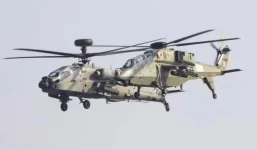
Currently, the Army’s modernization efforts are centered on the Light Utility Helicopter (LUH), the Light Combat Helicopter (LCH) "Prachand," and the Indian Multi-Role Helicopter (IMRH).These platforms are designated to replace aging fleets like the Cheetah and Chetak, as well as the Mi-17 medium-lift series.
However, traditional rotary-wing aircraft face significant physical constraints at extreme elevations. Standard helicopters generally struggle with "retreating blade stall," which limits their top speed to approximately 250–300 km/h.
Furthermore, operating with full payloads becomes increasingly difficult above 18,000 feet.
Tilt-rotor technology overcomes these hurdles by using rotatable engine nacelles. This allows the aircraft to take off vertically like a helicopter and then transition into a high-speed, fuel-efficient airplane mode once airborne.
Operational Advantages for Border Security
The integration of tilt-rotors would offer several strategic benefits for defence and logistics:- Rapid Deployment: Troops stationed in lowland areas could reach forward posts on the Line of Actual Control (LAC) in nearly half the time required by current helicopters.
- High-Altitude Superiority: These aircraft can cruise at altitudes reaching 25,000 feet, allowing them to fly safely over most Himalayan peaks.
- Advanced Medical Care: Most tilt-rotor designs feature pressurized cabins. This allows for the swift medical evacuation (MedEvac) of soldiers at high altitudes without the risk of hypoxia (oxygen deprivation).
Global Trends and Domestic Outlook
For years, the V-22 Osprey was the only operational military tilt-rotor.However, the global landscape is shifting. Recent developments include the Bell V-280 Valor, selected for the U.S. Army’s Future Long-Range Assault Aircraft program, and Leonardo’s AW609, which is nearing full civil and government certification.
In late 2025, Leonardo also successfully flew its Next-Generation Civil Tiltrotor (NGCTR) demonstrator, signaling a broader international move toward this hybrid technology.
While the Indian Army has not yet released a formal procurement timeline, the force is closely monitoring these global advancements.
Potential future paths include indigenous development through Hindustan Aeronautics Limited (HAL) or strategic partnerships with international 0manufacturers.
As border operations increasingly demand a combination of speed, range, and vertical flexibility, tilt-rotor technology is positioned as the next logical frontier for India's military aviation strategy.