- Views: 3K
- Replies: 6
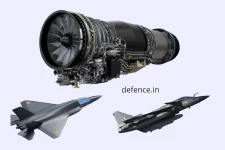
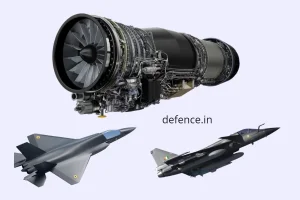
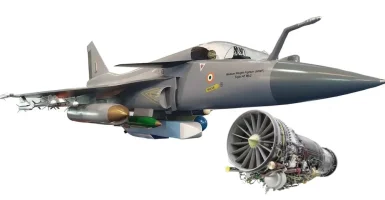
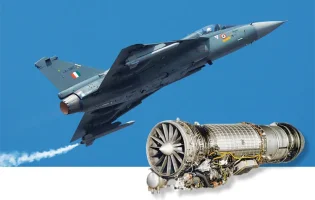
India is on the verge of cementing a pivotal defence agreement with the United States, with the technology transfer deal for General Electric (GE) F414 engines expected to be formally signed by March 2026.
According to sources close to the development, negotiations for the prospective USD 1.5 billion contract have been concluded, establishing a framework for an unprecedented 80 per cent Transfer of Technology (ToT).
This agreement represents a cornerstone of India’s aerospace ambitions, specifically for the Tejas Mk2 programme.
Once approved by both governments—a process anticipated to complete within the first quarter of 2026—Hindustan Aeronautics Limited (HAL) will commence the phased absorption of critical manufacturing technologies.
The goal is to establish a comprehensive domestic ecosystem for building, servicing, and sustaining these advanced propulsion systems.
Deepening Indigenous Capabilities
The scope of the 80 per cent ToT marks a significant leap from previous defence collaborations.Open-source data indicates that this transfer will likely include sensitive technologies that were previously restricted, such as the machining of single-crystal turbine blades, laser drilling for combustors, and special coatings for corrosion and thermal resistance.
If the March 2026 timeline holds, HAL targets the rollout of the first "Made-in-India" F414 engine by mid-2029. This three-year window will be utilised to set up specialised production lines, calibrate complex testing rigs, and certify the licensed manufacturing processes.
Beyond the Tejas Mk2, this production capability is expected to support the Advanced Medium Combat Aircraft (AMCA) Mk1 and potentially future engine variants.
Prototype Strategy for Tejas Mk2
To ensure the Tejas Mk2 development remains on track while local manufacturing is established, the initial prototypes will be powered by F414 engines already supplied by GE.These units are currently being maintained by HAL under original equipment manufacturer (OEM) protocols and have been subjected to periodic ground trials to verify their readiness.
HAL plans to roll out the first Tejas Mk2 prototype in 2026, powered by one of these imported engines. A total of four prototypes are scheduled to be built progressively until 2031.
These aircraft will undertake a rigorous flight test campaign aimed at validating:
- The expanded aerodynamic envelope.
- The digital flight control systems.
- Mission system integration.
- Weapons release capabilities.
Accelerating Induction with Limited Series Production
In a bid to compress the timeline between development and operational deployment, HAL has proposed a Limited Series Production (LSP) run for the Tejas Mk2.Subject to approval by the Indian Air Force (IAF), HAL intends to manufacture eight LSP aircraft between 2030 and 2032, prior to the receipt of the final production clearance.
This forward-looking strategy aims to deliver immediate strategic benefits:
- Pilot Conversion: It will allow the IAF to train a cadre of pilots on the new platform well before full-scale induction.
- Performance Data: The force will gain detailed insights into the aircraft's handling characteristics across various payloads and configurations.
- Ecosystem Readiness: These units will serve as testbeds for integrating indigenous weapons, radar upgrades, and mission computers, thereby significantly "de-risking" the full production phase planned for 2032–33.