- Views: 2K
- Replies: 4
India’s domestic engine initiative for the futuristic Ghatak stealth drone has reached a crucial manufacturing milestone.
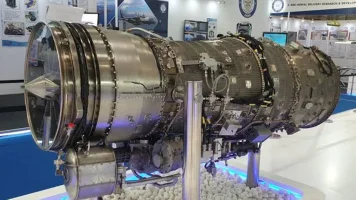
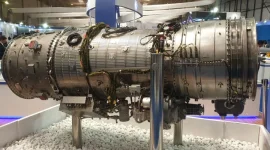
Godrej Aerospace has successfully handed over the initial serial production engine—designated as the D-1—to the Gas Turbine Research Establishment (GTRE).
This delivery signals a major shift for the ambitious defence project, moving it away from laboratory-built prototypes toward a standardized manufacturing system aimed at quality control, repeatability, and eventual mass production.
Unlike earlier experimental models that relied on custom, one-off assembly techniques, the new D-series engines represent a structured transition into full-scale industrial manufacturing.
Open-source data indicates that this powerplant is a "dry" (non-afterburning) derivative of the indigenous Kaveri engine, capable of generating approximately 46 to 51 kN of thrust.
The primary goal at this current stage is to thoroughly validate the supply chain, factory tooling, and quality assurance measures before the engine receives final approval for bulk manufacturing.
Looking ahead, the upcoming D-3 and D-4 units will feature further production-level tweaks prior to their handover to GTRE.
According to defence sources, these adjustments will not alter the core design of the engine. Instead, they are practical manufacturing refinements aimed at improving assembly ease, structural reliability, and production consistency.
Such iterative enhancements are standard practice in global aerospace engineering, where the focus lies in perfecting component tolerances and material processing before locking in the final blueprint for mass production.
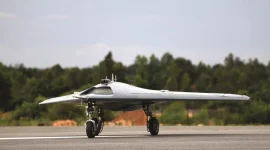
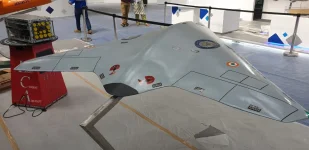
The D-series powerplants are tailor-made for India’s Remotely Piloted Strike Aircraft (RPSA) initiative, widely recognized as the Ghatak unmanned combat aerial vehicle (UCAV).
Expected to be a 13-tonne, tailless flying wing drone with an internal weapons bay capable of carrying 1.5 tons of payload, the Ghatak operates differently from traditional fighter jets.
Rather than focusing on supersonic speeds and maximum thrust, the drone's propulsion system prioritizes fuel endurance, mechanical reliability, and extreme stealth to survive deep inside heavily guarded enemy airspace.
To achieve these strict stealth parameters, the engine is equipped with a homegrown Advanced Full Authority Digital Engine Control Unit (AFADECU).
This sophisticated digital brain is specifically programmed for unmanned, subsonic flight missions.
Crucially, the AFADECU tightly manages fuel flow and operating temperatures to minimize the drone's thermal exhaust. Because modern air defence networks rely heavily on infrared sensors to track incoming threats, keeping the engine’s heat signature as low as possible is vital for the Ghatak’s combat survivability.
The successful handover of the D-1 engine, coupled with the ongoing fine-tuning of the D-3 and D-4 models, highlights steady momentum toward a mature production line.
Once these Dry Kaveri derivatives clear all necessary validation hurdles, GTRE will be positioned to greenlight large-scale manufacturing.
This will pave the way for live flight trials and, ultimately, the operational deployment of a formidable, indigenous stealth strike platform for the Indian armed forces.