- Views: 4K
- Replies: 11
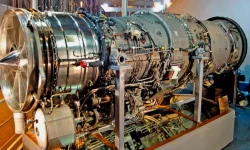
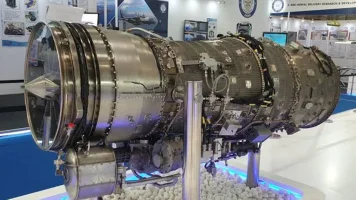
In a major development for India's domestic aerospace manufacturing, the Gas Turbine Research Establishment (GTRE) has instructed private industry partner Godrej & Boyce to supply future Kaveri Derivative Engines (KDE) as fully assembled units.
Starting with the D-3 production model, this directive moves away from the previous practice of delivering engine components in unassembled kits.
The strategic shift is designed to transform the project from a research and development phase into full-scale industrial production, significantly speeding up manufacturing timelines for the nation's defence sector.
Shifting the Assembly Burden to the Private Sector
Godrej had previously secured a contract to manufacture eight complete engine sets.The initial units in this production run, designated D-1 and D-2, were delivered in modules and pieced together at GTRE’s own facilities.
These early units represented a vital transition from the experimental 'P-series' prototypes to the 'D-series'—engines built to strict, repeatable industrial standards.
By mandating that Godrej handle the complete assembly from the D-3 unit onward, GTRE is actively transferring critical integration responsibilities to the private sector.
This allows GTRE scientists to focus their expertise exclusively on the complex stages of testing, validation, and final certification, rather than routine mechanical assembly.
Rigorous Testing for Extreme Environments
While future units are being assembled, the existing D-1 and D-2 engines are currently undergoing demanding evaluations. These include up to 150 hours of strict endurance testing and high-altitude performance checks.To simulate real-world, low-pressure flight scenarios, these trials are actively taking place at specialised facilities, including India’s indigenous INDIRA test bed and Russia’s High-Altitude Test Facility (HATF).
Tailored for Long-Endurance Stealth Missions
The Kaveri Derivative Engine is specifically configured as a "dry" turbofan, meaning it operates without the afterburner usually required for supersonic fighter jets.While afterburners provide massive bursts of speed, they consume fuel rapidly. By removing this component, the KDE achieves superior fuel efficiency, reliability, and extended flight endurance.
These traits make the 49 kN thrust class engine highly suitable for Unmanned Combat Aerial Vehicles (UCAVs), where long-duration missions and stable performance are far more valuable than short supersonic sprints.
The Ghatak UCAV Connection
The urgency behind streamlining this production pipeline is closely tied to India's highly anticipated Ghatak UCAV programme.Driven by the Aeronautical Development Establishment (ADE), the Ghatak is envisioned as an autonomous, jet-powered stealth drone capable of deep-penetration strike missions.
In March 2026, the Defence Procurement Board reportedly recommended the acquisition of 60 Ghatak drones.
This massive potential order has created an immediate need for a robust, private-sector manufacturing ecosystem capable of delivering engines at scale without compromising quality.
Future-Proofing with Digital Integration
To support this large-scale transition, Godrej is expected to build comprehensive, end-to-end assembly lines.This upgrade will likely incorporate "digital twin" technology—a process that creates a highly detailed virtual model of the engine.
This allows engineers to simulate performance and run pre-delivery validations digitally before physical testing even begins, drastically reducing development time.
Ultimately, GTRE's arrangement is about more than just fulfilling an immediate order; it is a strategic transfer of vital aerospace know-how, laying the foundation for Indian private industry to independently mass-produce advanced jet engines for future defence needs.