GTRE Directs Godrej to Deliver Fully Assembled Kaveri Derivative Engines Amid Potential Large-Scale Demand for Ghatak UCAV

GTRE Directs Godrej to Deliver Fully Assembled Kaveri Derivative Engines Amid Potential Large-Scale Demand for Ghatak UCAV


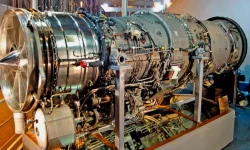
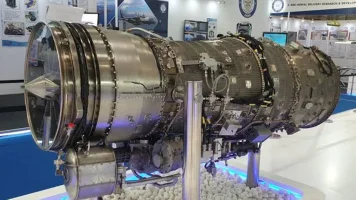
In a major development for India's domestic aerospace manufacturing, the Gas Turbine Research Establishment (GTRE) has instructed private industry partner Godrej & Boyce to supply future Kaveri Derivative Engines (KDE) as fully assembled units.

Starting with the D-3 production model, this directive moves away from the previous practice of delivering engine components in unassembled kits.

The strategic shift is designed to transform the project from a research and development phase into full-scale industrial production, significantly speeding up manufacturing timelines for the nation's defence sector.

Shifting the Assembly Burden to the Private Sector​

Godrej had previously secured a contract to manufacture eight complete engine sets.

The initial units in this production run, designated D-1 and D-2, were delivered in modules and pieced together at GTRE’s own facilities.

These early units represented a vital transition from the experimental 'P-series' prototypes to the 'D-series'—engines built to strict, repeatable industrial standards.

By mandating that Godrej handle the complete assembly from the D-3 unit onward, GTRE is actively transferring critical integration responsibilities to the private sector.

This allows GTRE scientists to focus their expertise exclusively on the complex stages of testing, validation, and final certification, rather than routine mechanical assembly.

Rigorous Testing for Extreme Environments​

While future units are being assembled, the existing D-1 and D-2 engines are currently undergoing demanding evaluations. These include up to 150 hours of strict endurance testing and high-altitude performance checks.

To simulate real-world, low-pressure flight scenarios, these trials are actively taking place at specialised facilities, including India’s indigenous INDIRA test bed and Russia’s High-Altitude Test Facility (HATF).

Tailored for Long-Endurance Stealth Missions​

The Kaveri Derivative Engine is specifically configured as a "dry" turbofan, meaning it operates without the afterburner usually required for supersonic fighter jets.

While afterburners provide massive bursts of speed, they consume fuel rapidly. By removing this component, the KDE achieves superior fuel efficiency, reliability, and extended flight endurance.

These traits make the 49 kN thrust class engine highly suitable for Unmanned Combat Aerial Vehicles (UCAVs), where long-duration missions and stable performance are far more valuable than short supersonic sprints.

The Ghatak UCAV Connection​

The urgency behind streamlining this production pipeline is closely tied to India's highly anticipated Ghatak UCAV programme.

Driven by the Aeronautical Development Establishment (ADE), the Ghatak is envisioned as an autonomous, jet-powered stealth drone capable of deep-penetration strike missions.

In March 2026, the Defence Procurement Board reportedly recommended the acquisition of 60 Ghatak drones.

This massive potential order has created an immediate need for a robust, private-sector manufacturing ecosystem capable of delivering engines at scale without compromising quality.

Future-Proofing with Digital Integration​

To support this large-scale transition, Godrej is expected to build comprehensive, end-to-end assembly lines.

This upgrade will likely incorporate "digital twin" technology—a process that creates a highly detailed virtual model of the engine.

This allows engineers to simulate performance and run pre-delivery validations digitally before physical testing even begins, drastically reducing development time.

Ultimately, GTRE's arrangement is about more than just fulfilling an immediate order; it is a strategic transfer of vital aerospace know-how, laying the foundation for Indian private industry to independently mass-produce advanced jet engines for future defence needs.
 
My trillions of Dollars technologies as material Science already given need to be protected including Core of the Engine, Annular Combustor, Exhaust, Afterburner, Various Single Crystal Blades, Fan etc. These technologies are not for Private Sector.
 
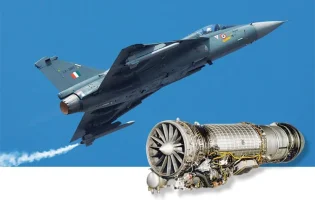
Technology and Royalty is one thing, manufacturing efficiently to scale is another thing. Till date, no indigenous but only imported Russian technology for AL31F engines used in unquestioned monopoly hence arguably inefficient manufacture by state owned enterprises for SU30MKI with poor maintenance record and life. And GTRE Kaveri was quite useless but Godrej (with GTRE) has created Derivatives till D3 that finally look good enough for Godrej to assemble efficiently, and here you go, like parochial socialism proponents, where state enterprises never delivered efficiently. And you also mention afterburners a technology not in Kaveri KDE for Ghatak but credit goes entirely to jv Brahmos ( ot gtre) that may (??) be used in Kaveri D4 meant for Tejas1a onstead of GE404, not even Tejas2 with GE414. Please stop thinking Private Sector is stealing from your pocket and public sector if God. It's all about cutting edge technology and efficient manufacturing first. So please rest, assured proper costing will give value for all our (not your) money.
 
My trillions of Dollars technologies as material Science already given need to be protected including Core of the Engine, Annular Combustor, Exhaust, Afterburner, Various Single Crystal Blades, Fan etc. These technologies are not for Private Sector.
The new Crystal Blade Technology is from private sector Datu... not gtre. Afterburner from Brahmos... These technologies are by, for private sector... what matters is high quality lower price for OUR air force.
 
The material science technologies have already been transferred by me for India with condition of Indian PSUs making it only but the clandestine blatant selling make me angry. Though I still have given technologies but demanded royalty which they can not pay. The three feather weight out of nine total single crystal blades uptill now I gave only are Hundreds of trillions of USD. Rest technology cost much more. The selling of Hypersonic Missiles technologies by one and only one characterless person in 2015-2016 make me angry. You guess whom yourself. Similarly selling of Hypersonic Green Fuel to another Country make me angry. This by another Person along with Team of persons with one of Top Most Industrialists. You Guess yourself Whom?

My Single Crystal Blades are used in Tejas. DRDO clandestinely copied them. They also blatantly misused it.
 
Last edited:
The material science technologies have already been transferred by me for India with condition of Indian PSUs making it only but the clandestine blatant selling make me angry. Though I still have given technologies but demanded royalty which they can not pay. The three feather weight out of nine total single crystal blades uptill now I gave only are Hundreds of trillions of USD. Rest technology cost much more. The selling of Hypersonic Missiles technologies by one and only one characterless person in 2015-2016 make me angry. You guess whom yourself. Similarly selling of Hypersonic Green Fuel to another Country make me angry. This by another Person along with Team of persons with one of Top Most Industrialists. You Guess yourself Whom?

My Single Crystal Blades are used in Tejas. DRDO clandestinely copied them. They also blatantly misused it.
I don't understand. Who are you. A scientist or engineer? Your trillions from dreams
 

Forum statistics

Threads
6,729
Messages
64,195
Members
5,131
Latest member
sudheer kand
Back
Top