Hindustan Aeronautics Limited (HAL) has successfully qualified a new dual-rail launcher for the Advanced Short Range Air-to-Air Missile (ASRAAM) on the Tejas Mk1A fighter jet.
This crucial milestone in the aircraft's indigenous weapons integration programme allows the 4.5-generation fighter to carry a heavier payload of close-combat missiles without taking up additional weapon stations on its wings.
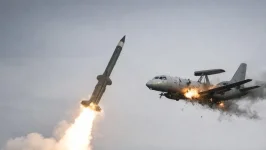
Manufactured by MBDA UK and supported by Bharat Dynamics Limited (BDL), the ASRAAM is widely considered one of the most formidable within-visual-range (WVR) weapons in service today.
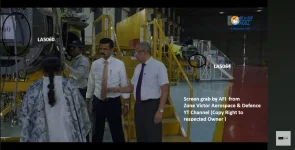
During a recent interview with the Zone Victor Aerospace & Defence YouTube channel, Sumana Prakash, General Manager at HAL’s Aircraft Research & Design Centre (ARDC), formally confirmed the achievement.
Prakash stated that the Tejas Mk1A has cleared all necessary trials for both single and twin-missile launches using the newly designed dual-pylon system.
This innovation effectively doubles the aircraft's short-range firepower on a single wing station by enabling the carriage and deployment of two ASRAAMs where only one could fit previously.
The rigorous testing phase involved firing a single missile from the dual rack, followed by a separate test to launch both missiles sequentially from the exact same pylon.
According to Prakash, the flawless execution of these trials successfully validated key engineering parameters. This includes ensuring safe missile separation from the jet, flawless performance of the launcher itself, and the seamless integration of the weapon with the aircraft's onboard firing systems to meet strict operational standards.
This dual-pylon configuration provides a massive boost to the Tejas Mk1A’s within-visual-range combat readiness.
Previously, a single wing station was limited to carrying just one short-range missile. The new dual-rail setup allows pilots to carry a larger stockpile of dogfighting missiles while keeping the aircraft's remaining external hardpoints free.
These freed-up stations can now be dedicated to other essential payloads, such as the 110-kilometre range Astra Mk1 beyond-visual-range (BVR) missiles, smart bombs, advanced electronic warfare (EW) pods, or external drop tanks for extended missions.
To make this dual-launch capability a reality, Prakash noted that HAL engineers had to introduce specific structural modifications to the fighter's wings. Mounting two missiles on a single pylon alters the physical weight distribution and changes the aerodynamic drag on the aircraft.
Consequently, the wing structure had to be reinforced to safely endure the additional physical strain and intense aerodynamic forces experienced during flight maneuvers and rapid missile launches.
While HAL has kept the exact technical details of these structural upgrades confidential, standard aerospace modifications of this type are highly complex.
They generally require reinforcing the physical attachment points on the wing, strengthening the internal load-bearing framework, and completely upgrading the mechanical and electrical wiring networks to safely trigger a dual-release mechanism.
The ASRAAM, known for reaching speeds exceeding Mach 3 and hitting targets at ranges exceeding 25 kilometres, is an elite infrared-guided missile.
It features a highly advanced imaging infrared seeker and a large rocket motor, ensuring immense speed and agility in the final moments before striking a target.
When this missile is paired with the Tejas Mk1A’s state-of-the-art indigenous Uttam Active Electronically Scanned Array (AESA) radar, comprehensive electronic warfare suite, and Helmet Mounted Display System (HMDS), pilots gain a lethal advantage in close-quarters dogfights, capable of locking onto enemy aircraft at extreme angles.
By adopting this new launcher, mission planners gain tremendous tactical flexibility.
Aircrews can now deploy into combat with a robust supply of short-range interceptors without sacrificing the heavy-hitting beyond-visual-range capabilities provided by the Astra Mk1. This allows the Indian Air Force to precisely tailor the Tejas Mk1A's weapon loadout to match the specific demands of any given mission.
The successful conclusion of these single and twin-missile launch tests is a defining moment for India's push towards self-reliance in aerospace defence. It not only expands the arsenal of the Tejas Mk1A but also highlights HAL’s maturing engineering prowess.
The company has proven its ability to successfully execute complex structural and systemic upgrades that dramatically elevate a fighter jet's combat effectiveness well beyond its original design limits.