For more than twenty years, the BrahMos supersonic cruise missile was primarily known for its impressive technical specifications and flawless test records.
However, this perception shifted completely in May 2025. During Operation Sindoor, the Indian Air Force (IAF) deployed the weapon in active warfare for the first time, successfully transitioning it from a highly respected development project into a battle-validated strategic system.
Following a tragic terrorist attack in Pahalgam on April 22, 2025, which claimed the lives of 26 civilians, India launched a swift and calculated military response between May 7 and May 10.
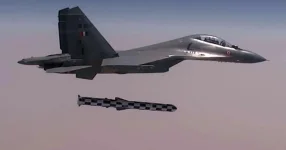
A major element of this retaliation was a coordinated standoff strike utilising precisely 19 BrahMos missiles fired from Su-30MKI fighter jets, alongside 19 SCALP missiles launched by the IAF's Rafale fleet.
The true historical weight of this offensive was not defined by the sheer volume of weapons used, but rather by their devastating impact.
Striking 11 critical targets—including major Pakistani airbases like Nur Khan, Jacobabad, and Sargodha—the Indian military demonstrated a highly sophisticated, network-centric approach.
Instead of relying on traditional, large-scale bombing runs, the operation heavily utilised electronic warfare, precision strikes, and the active suppression of enemy air defences.
Tactical deception played a massive role in the campaign's success. The IAF deployed Israeli-made Harop loitering munitions and pilotless decoy drones to bait Pakistani radar systems into turning on.
Once these air defence networks revealed their locations, Indian fighter jets fired their long-range cruise missiles from safe, standoff distances.
Reports indicate that the entire offensive mission was completed in just 23 minutes, ensuring all Indian aircraft remained safely out of hostile airspace.
This short but intense conflict highlighted the defining advantage of the BrahMos missile: its ability to deliver a heavy conventional payload with unmatched speed and accuracy.
Flying at nearly Mach 3, the missile drastically cuts down the window for the enemy to react.
Traditional air defence systems, which are mostly built to counter slower subsonic threats, simply cannot cope with a supersonic weapon flying at low altitudes.
Reports confirmed that not a single BrahMos was intercepted by Pakistan’s Chinese-supplied air defence networks.
In modern aerial warfare, the timeline from detecting an incoming threat to making an interception decision is everything.
The BrahMos system violently compresses this timeline. By the moment adversarial radar detects, tracks, and attempts to stop the incoming missile, there are merely seconds left before it successfully impacts the target.
Operation Sindoor proved that a small, highly precise arsenal can achieve military outcomes that historically required massive and prolonged air campaigns.
The pinpoint strikes caused severe damage to Pakistani military infrastructure and grounded aircraft. Furthermore, the immense financial and infrastructural toll heavily influenced both the diplomatic negotiations and strategic decisions that led to the conflict's de-escalation.
Beyond achieving immediate military success, the campaign permanently altered how the international community views the BrahMos system.
Previously seen as a high-tech marvel on paper, it is now globally recognised as a combat-proven weapon capable of breaching heavily guarded enemy airspace.
This operational success is directly responsible for a massive surge in global demand.
Following a landmark $455 million export deal with the Philippines, over 14 nations—including Vietnam, Indonesia, and the UAE—are actively seeking to acquire the system.
Potential buyers are highly attracted to its fire-and-forget reliability, as well as the upcoming BrahMos-NG (Next Generation) variant, which promises to be 50% lighter and compatible with a wider variety of combat platforms.
The missile’s combat debut also validated India’s evolving doctrine of standoff warfare.
Modern air forces are increasingly shifting away from sending manned aircraft deep into dangerous territory, preferring instead to neutralise strategic targets from hundreds of kilometres away.
Combining incredible speed, pinpoint accuracy, and high survivability, the BrahMos fits seamlessly into this modern combat philosophy.
Ultimately, the most important lesson from Operation Sindoor is a shift in how military supremacy is measured.
The outcome of a modern conflict is no longer dictated simply by the number of fighter jets, ships, or tanks a nation possesses. Today, battlefield dominance is determined by precision munitions, integrated networks, and advanced standoff strike capabilities.