India’s military manufacturing sector is experiencing a historic transformation under the national Atmanirbhar Bharat initiative.
A vital indicator of this success is the rising percentage of indigenous content (IC) found in major weapon systems.
This metric, often referred to as the "Atmanirbhar Score," measures not only domestic manufacturing but also local design ownership and the development of sovereign intellectual property.
As of mid-2026, driven by the stringent guidelines of the drafted Defence Acquisition Procedure (DAP) 2026, several crucial military projects have achieved unprecedented levels of local integration.
Aerospace Programmes Spearhead Localisation
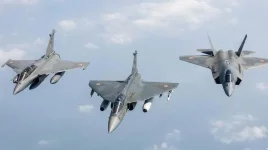
Led by institutions like Hindustan Aeronautics Limited (HAL) and the Aeronautical Development Agency (ADA), the aerospace sector is making massive leaps.The Light Combat Aircraft (LCA) Tejas Mk1A now features an indigenous content score exceeding 64% in its recent production blocks.
This increase is largely due to the integration of homegrown technologies, notably the DRDO-developed Uttam Active Electronically Scanned Array (AESA) radar and the Swayam Raksha Kavach electronic warfare system.
Future production tranches are projected to reach between 70% and 75% as domestic weapons and avionics replace foreign components. Looking ahead, the heavier Tejas Mk2 fighter is targeting a baseline of nearly 80% IC.
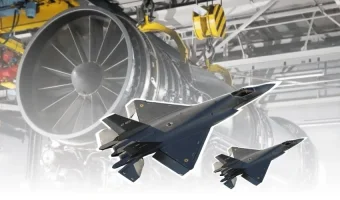
Simultaneously, India's fifth-generation stealth fighter, the Advanced Medium Combat Aircraft (AMCA), is being designed to secure a minimum of 70% local content right from the prototype phase.
Through private industry consortiums, India aims to locally manufacture critical stealth coatings and advanced sensors for the AMCA.
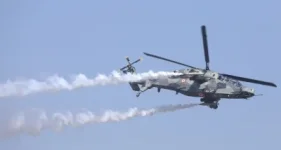
In the rotary-wing segment, the HAL-developed Light Combat Helicopter (LCH) Prachand has already crossed a 65% IC threshold.
Supported by a vast supply chain of over 250 domestic companies, including numerous Micro, Small, and Medium Enterprises (MSMEs), the high-altitude attack helicopter demonstrates the deep roots of India's developing defence ecosystem.
Missiles and Artillery Systems
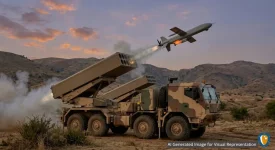
In the realm of strategic and tactical strike weapons, domestic production supply chains are firmly established.The Indo-Russian BrahMos supersonic cruise missile maintains a robust 65% to 75% local content rate, with the upcoming, more compact BrahMos-NG aiming for an even higher indigenous footprint.
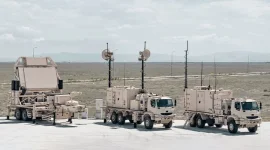
Other major Defence Research and Development Organisation (DRDO) projects, such as the Akash surface-to-air missile network and the Pinaka multi-barrel rocket launcher systems, consistently report localisation rates between 70% and 80%.
This is largely thanks to mature manufacturing lines operated jointly by state-owned enterprises and private defence giants like Larsen & Toubro and Tata Advanced Systems.
Naval Dominance and Submarine Building
The Indian Navy has long been a pioneer in indigenisation, a trend that is only accelerating.Under Project 75I (P-75I), which involves building six advanced conventional submarines equipped with Air Independent Propulsion (AIP) technology, the vessels will begin with an initial indigenous content of 45% to 50%.
As technology is progressively transferred from foreign Original Equipment Manufacturers (OEMs) to Indian shipyards, this figure is mandated to scale up to 60% for the final boats.
Surface fleet numbers are equally impressive. The aircraft carrier INS Vikrant, built by Cochin Shipyard Limited, was commissioned with roughly 76% indigenous materials, setting a modern benchmark.
Furthermore, the Project 17A stealth frigates currently under construction feature over 60% local components.
Policy Reforms and the Road Ahead
These advancements are largely mandated by updated government policies that reward local innovation.The draft DAP 2026 has significantly raised the bar for procurement.
The highest priority procurement category, Buy (Indian-IDDM — Indigenously Designed, Developed and Manufactured), now requires a minimum of 60% overall indigenous content, a notable increase from the 50% mandated in the earlier DAP 2020 framework.
For certain projects, 30% IC is even required at the prototype stage.
While India's defence industry has moved far beyond the 40% to 50% local content averages seen a decade ago, certain bottlenecks persist.
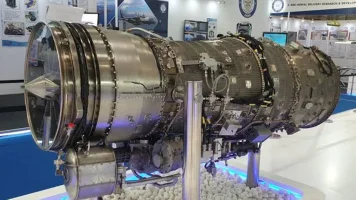
Developing sovereign aero-engines, highly advanced sensors, and specialised high-tech materials remain complex challenges.
Nevertheless, the combination of aggressive policy reforms, phased import bans (positive indigenisation lists), and a heavily involved private sector ensures that India's defence ecosystem is on a definitive and rapid path toward complete self-reliance.