- Views: 2K
- Replies: 11
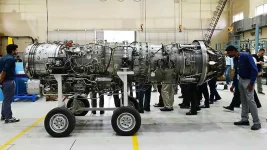
India’s pursuit of the 110–130 kN Advanced High Thrust Combat Engine (AHTCE) is entering its most crucial stage to date.
Defence experts note that upcoming trials of the High-Pressure Compressor (HPC) will serve as the ultimate test, representing both a major technological hurdle and a critical path to success for the nation’s jet propulsion ambitions.
In January 2026, the Gas Turbine Research Establishment (GTRE)—a laboratory under the Defence Research and Development Organisation (DRDO)—issued an Expression of Interest (EoI) to identify a private-sector partner for the engine's development and production.
This mandate, which calls for the delivery of 18 test engines over a 10-year span, has shifted the indigenous engine project into a fast-tracked testing phase. The primary goal is to solve the complex propulsion issues that stalled previous attempts, most notably the Kaveri engine project.
The High-Pressure Compressor is arguably the most vital component of the AHTCE.
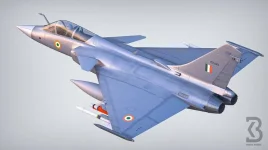
Its success will dictate whether India’s future fighter engines can produce the sustained power, fuel efficiency, and supercruise capabilities demanded by fifth-generation platforms like the Advanced Medium Combat Aircraft (AMCA), as well as future sixth-generation fighters.
Unlike previous development models that relied heavily on isolated, lab-scale tests, the AHTCE initiative is advancing to integrated simulation trials.
These will mimic high-altitude and high-temperature combat scenarios. To support this, a major new high-altitude, high-thrust engine testing centre is nearing completion at Rajanukunte, near Bengaluru.
According to reliable sources, this specialised facility is expected to host the first standalone "Hot Run" of the HPC module later in 2026.
This marks a transformative milestone for India’s aerospace sector, as the new testbed can accurately recreate the severe aerodynamic and pressure environments found at altitudes near 40,000 feet. Such realistic testing is vital for ensuring the compressor's stability and reliability during combat manoeuvres.
These rigorous tests are specifically designed to address "compressor stall," a severe aerodynamic issue that heavily affected the earlier Kaveri program.
A stall happens when airflow within the compressor destabilises or reverses due to extreme stress. This can lead to a sudden loss of thrust, violent vibrations, or even total engine destruction.
Successfully maintaining high-pressure compression at extreme thrust levels remains one of the toughest obstacles in manufacturing modern military jet engines.
To overcome these historical limitations, the new HPC features an entirely different architectural design compared to its predecessors.
A key innovation is the integration of home-grown Single-Crystal turbine and compressor blades, engineered by DRDO’s Defence Metallurgical Research Laboratory (DMRL).
The ability to manufacture single-crystal blades is a hallmark of elite aerospace powers.
By eliminating the internal grain boundaries found in standard metallic blades, this technology vastly improves structural integrity under extreme heat.
The blades currently undergoing testing are designed to endure temperatures well above 1,500 degrees Celsius inside the engine core.
This extreme heat tolerance directly translates to superior thermal efficiency and sustained thrust.
Furthermore, the AHTCE aims to achieve an impressive compressor pressure ratio of 30:1 or greater.
This ratio, which measures the air compression level before fuel ignition, puts the engine on par with modern fifth-generation powerplants globally.
High pressure ratios are essential for maximising thrust and reducing fuel consumption.
Crucially for the AMCA, reaching this benchmark is necessary for "supercruise"—the ability to fly at supersonic speeds continuously without engaging fuel-heavy afterburners.
Supercruise allows stealth aircraft to penetrate contested airspace rapidly without the massive infrared heat signature generated by afterburners.
The AHTCE compressor also incorporates Integrally Bladed Rotors, known as "Blisks" in the aviation industry.
Instead of attaching individual blades to a central disk, Blisks are precision-machined as a single, unified structure.
While this advanced manufacturing technique drastically cuts engine weight and enhances aerodynamic flow, it also introduces highly complex vibration dynamics at extreme rotational speeds.
Currently, researchers are dedicating significant effort to advanced resonance management and vibration analysis to validate the new Blisk architecture.
If these High-Pressure Compressor trials succeed, India will secure its place among a select group of nations capable of designing and manufacturing advanced, high-thrust jet engines, significantly boosting its strategic autonomy in defence aviation.