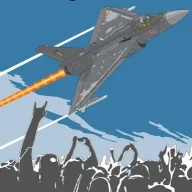
Discussions regarding Pakistan's possible purchase of China's advanced J-35 stealth fighter jet have recently shifted focus. Instead of questioning whether the sale will eventually happen, experts are now asking when Beijing will decide the timing is strategically appropriate.
Recent commentary from strategic analysts, such as Yang Xiaotong writing for The Diplomat, indicates that China's reluctance might not just be about manufacturing limits or keeping its technology secret. Instead, a major factor could be China's desire to maintain strategic stability in the South Asian region.
Even though the Chinese government has never officially cited this as a reason for delaying exports, defence experts believe Beijing has strong reasons to avoid causing a massive shift in military power that could upset the balance between neighbouring rivals.
Avoiding Overconfidence and Miscalculation
A major worry among defence observers is the impact of introducing a highly advanced, fifth-generation fighter jet into South Asia before India has a similar aircraft.Stealth jets like the J-35 are a massive leap in capability, not just a minor improvement over older planes. Their ability to evade radar, combined with highly advanced sensors, data sharing, and network-centric systems, offers huge operational advantages, especially at the start of a conflict.
Experts warn that if one nation feels it has a massive technological advantage over its rival, its leaders might theoretically be tempted to take riskier military actions than they normally would. This idea is based on established theories of military deterrence, rather than specific predictions of what politicians will actually decide.
In this scenario, Beijing's primary goal is to prevent a situation where a perceived military edge leads to dangerous instability during future regional crises.
Keeping Clear of Regional Entanglements
Another key reason pointed out by defence commentators involves China's larger global geopolitical goals.China's primary long-term focus remains its strategic rivalry with the United States in the Western Pacific. A major war between India and Pakistan would demand significant diplomatic effort, cause economic disruptions, and potentially interfere with Beijing's broader priorities in the region.
While China has a strong strategic partnership with Pakistan, analysts point out that Beijing typically tries to stay out of direct military clashes between India and Pakistan. Therefore, keeping South Asia stable directly aligns with China's overall national interests.
If sending advanced stealth fighters to Pakistan increases the risk of a war starting by mistake, experts believe Beijing has good reasons to adopt a much slower export timeline. Recent reports already indicate that the delivery of the J-35A to Pakistan could face a delay of up to four years.
Preserving the Balance of Power
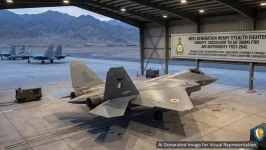
Many defence experts observe that China's military policy usually aims to keep regional power balanced and predictable, rather than giving one ally an overwhelming military advantage.Under this logic, China might wait to export the J-35 until India introduces its own fifth-generation jet, such as the Advanced Medium Combat Aircraft (AMCA).
Currently, India's AMCA programme is still several years away from being fully operational, with deployment generally expected in the mid-2030s. Waiting would keep the power balance relatively equal and prevent either side from feeling they have a temporary window to launch an opportunistic attack.
This sequencing fits perfectly with the broader idea of deterrence: when both countries have comparable high-tech weapons, neither has a strong incentive to take preventive military action.
Therefore, analysts suggest China might prefer a reactive approach to exporting these jets, rather than rushing a sale that could accidentally reshape the region's power dynamics.
Protecting High-Tech Secrets
Of course, maintaining peace in South Asia is just one part of the equation.The Shenyang J-35, which officially entered service with China's military in late 2025, is one of the country's most secretive and advanced aerospace projects. It features stealth shaping, highly sophisticated electronics, advanced sensors, and sensitive mission equipment. Selling this aircraft abroad requires extensive consideration regarding the protection of technology, keeping operational secrets safe, and ensuring the jets can be sustained over the long term.
These security concerns alone are powerful enough to influence the export timeline, regardless of what is happening between India and Pakistan. The risk of sensitive Chinese military technology being compromised remains a significant hurdle.
Expert Opinions, Not Official Policy
It is vital to distinguish between these analytical assessments and confirmed policies of the Chinese government.China has never publicly declared that it intends to hold back J-35 exports until India inducts a fifth-generation fighter. The arguments discussed here originate from defence analysts trying to understand Beijing's possible decision-making, rather than statements of official policy.
While Pakistan has expressed strong interest in acquiring up to 40 of these stealth fighters, a final agreement and delivery schedule remain completely unconfirmed.
Many other variables will ultimately shape any final export decision. These include how fast China can build the jets, the pressing needs of its own air force and navy, pricing structures, industrial priorities, and future global developments.