- Views: 2K
- Replies: 1
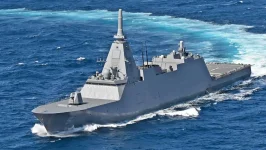
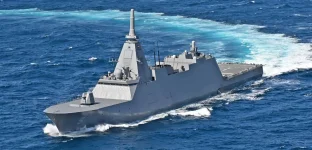
Tokyo’s recent overture to jointly manufacture its advanced Mogami-class (30FFM) stealth frigates in India marks a pivotal moment in bilateral defence relations.
For New Delhi, this presents a calculated opportunity to address critical naval shortfalls while preserving the momentum of domestic shipbuilding.
While some defence analysts have been quick to dismiss the offer, this collaboration is not designed to overshadow India’s formidable Project 17A Nilgiri-class warships.
Instead, it aims to introduce a supplementary set of maritime capabilities that the Indian Navy urgently requires.
According to available reports, Japan’s pitch involves the co-production of these frigates at Indian shipyards, backed by a comprehensive Transfer of Technology (ToT) agreement that perfectly aligns with the 'Make in India' and Atmanirbhar Bharat initiatives.
This arrangement goes far beyond standard industrial cooperation. It promises a profound infusion of next-generation technology, granting India access to highly sophisticated automation architectures, modular mission designs, and integrated mast systems.
Although the Indian Navy takes understandable pride in its robust indigenous warship design capabilities, outright dismissing Tokyo’s proposal means missing out on the distinct, cutting-edge advantages the Mogami platform delivers.
The crux of this debate lies in understanding the difference between replacing existing assets and augmenting them.
India’s Nilgiri-class frigates are heavy, frontline combatants built explicitly for high-intensity, blue-water engagements with robust anti-air, anti-surface, and anti-submarine weaponry.
Conversely, the Mogami-class operates on a hybrid philosophy. It successfully marries the offensive features of a modern stealth frigate with highly specialised mine warfare capabilities—a domain where the Indian Navy’s vulnerabilities are well-documented.
Securing maritime chokepoints and harbour approaches against naval mines has been a glaring weakness for India, especially since the Navy has operated without a single dedicated Mine Countermeasure Vessel (MCMV) following the retirement of its last Soviet-era minesweeper in 2019.
Rather than relying on traditional, single-purpose minesweepers, the Mogami-class offers a modern, integrated solution.
These Japanese warships can deploy Unmanned Surface Vehicles (USVs) and Autonomous Underwater Vehicles (AUVs) to detect and neutralise underwater threats.
By embedding a comprehensive mine warfare suite directly into a capable combat frigate, the Navy gains immense operational flexibility and avoids the immense cost of acquiring an entirely separate fleet of specialised MCMVs.
Another revolutionary aspect of the Japanese design is its radical approach to manpower and automation.
While conventional Indian frigates, including the Nilgiri-class, typically require a crew of around 250 sailors, the Mogami-class slashes this requirement to just 90 personnel.
This remarkable efficiency is driven by extensive automation, advanced sensor fusion, and a futuristic, circular Combat Information Centre (CIC) that utilises augmented reality displays.
For a naval force that routinely executes extended deployments across the vast Indo-Pacific, cutting crew size dramatically reduces lifecycle expenses, shrinks the logistical footprint, and enhances overall vessel endurance.
Looking beyond the technical specifications, Tokyo’s proposal carries profound geopolitical weight in the Indo-Pacific region.
As Japan continues to recalibrate its post-war defence posture, it is aggressively forging strategic maritime partnerships with friendly nations.
This is evidenced by Tokyo’s recent milestone agreement to supply an upgraded variant of the Mogami (the New FFM) to the Royal Australian Navy.
Extending a parallel co-production offer to New Delhi perfectly supports the broader Quad objective of building a network of interoperable naval forces.
Operating similar platforms would facilitate seamless real-time coordination, shared maintenance hubs, and unified logistical supply chains across the Indo-Pacific.
From a purely technological perspective, the Mogami-class brings several pioneering innovations to the forefront, most notably the UNICORN integrated mast.
This unique structure completely encloses communication, electronic warfare, and radar antennas within a single stealthy housing, vastly reducing the ship's radar cross-section compared to the cluttered mast designs traditionally seen on Indian warships.
Furthermore, Japanese shipbuilders have perfected an incredibly efficient manufacturing process, successfully launching these complex vessels within a mere two to three years.
Absorbing these rapid construction methodologies through a ToT framework could prove invaluable to India’s domestic maritime industry.
Ultimately, Tokyo’s proposal must be viewed through the correct strategic lens.
Japan’s intent is not to undermine Indian shipyards or rival established indigenous projects like the Project 17A.
Rather, it is extending a collaborative lifeline that can drastically accelerate India’s acquisition of next-generation naval architecture—technologies that might otherwise require decades of domestic research and development.
The true strategic prize is not simply adding another frigate class to the fleet, but permanently securing the advanced automation, modular frameworks, and integrated sensor technologies that will define the future of Indian naval dominance.