- Views: 2K
- Replies: 1
Recent developments in international aerospace cooperation suggest that India’s potential involvement in the European Future Combat Air System (FCAS) may act as a critical catalyst for the nation’s domestic fighter programs.
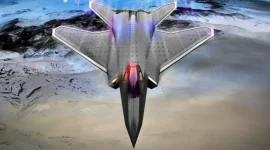
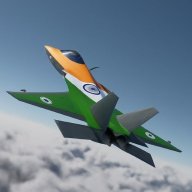
Rather than functioning as a rival project, analysts indicate that the FCAS could provide the high-end technological architecture necessary to elevate India’s indigenous Advanced Medium Combat Aircraft (AMCA) from a fifth-generation fighter to a platform equipped with sixth-generation capabilities.
Strengthening the Indo-French Aerospace Alliance
As of early 2026, diplomatic and technical consultations between India and France have gained significant momentum. These discussions are centered on deep-tier defence technology sharing, specifically focusing on the evolution of the AMCA.If a formal partnership is established within the FCAS ecosystem—currently led by France, Germany, and Spain—India could gain access to "Next Generation Fighter" (NGF) technologies.
Experts believe these innovations would likely be integrated into the AMCA Mk2, the planned successor to India's initial stealth fighter variant.
This collaboration follows a long history of aviation cooperation, most notably seen in the Indian Air Force's successful induction of the Dassault Rafale.
Breakthroughs in Propulsion Technology
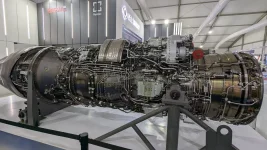
The most significant link between these two programs is the joint development of a high-thrust engine. In February 2026, India’s Gas Turbine Research Establishment (GTRE) and France’s Safran Aircraft Engines progressed plans to co-develop a 120–140 kilonewton (kN) thrust engine.While the initial AMCA Mk1 will utilize the American GE F414 engine, the Mk2 is intended to feature this new Indo-French power plant. Key features of this engine development include:
- Advanced Metallurgy: Use of single-crystal turbine blades to withstand extreme temperatures.
- Enhanced Power: Increased electrical generation capacity to support future directed-energy weapons and advanced sensors.
- Thermal Management: Improved cooling systems derived from sixth-generation propulsion research.
A "System-of-Systems" Approach
The FCAS program is defined by its "Combat Cloud," a digital network that connects manned aircraft, satellites, and autonomous drones.By participating in this framework, India could modernize its network-centric warfare capabilities.
A primary focus of this integration is Manned-Unmanned Teaming (MUM-T). This allows a pilot to command multiple "loyal wingman" drones, such as the HAL CATS Warrior currently under development in India.
Artificial intelligence (AI) developed through the FCAS partnership would assist in processing the immense volume of data generated during combat, allowing for near-instantaneous decision-making.
Transitioning to 6th-Generation Capabilities
The collaboration aims to push the AMCA Mk2 toward what is often termed "sixth-generation-lite."This involves moving beyond standard stealth to incorporate:
- Smart Skins: Aircraft surfaces embedded with distributed sensors to provide 360-degree situational awareness.
- Advanced Stealth: New radar-absorbent materials (RAM) that further minimize the aircraft’s signature against modern tracking systems.
- Optionally Manned Flight: The capability for the aircraft to perform high-risk missions, such as the suppression of enemy air defences, without a pilot onboard.
Timeline and Strategic Outlook
The Indian government granted full-scale development approval for the AMCA in 2025, with the first prototype expected to debut later this decade.As the AMCA Mk1 enters testing, the parallel development of the Indo-French engine and FCAS-derived AI systems will begin to shape the Mk2 variant.
Ultimately, this strategic alignment with France allows India to maintain its "Atmanirbhar Bharat" goals while ensuring its air force remains at the global cutting edge of aerial warfare technology.