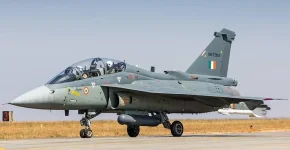
The Indian Air Force (IAF) is advancing its massive Multi-Role Fighter Aircraft (MRFA) programme, an ambitious initiative to acquire 114 new fighter jets.
With the French Dassault Rafale positioned as a leading platform, India could soon operate the largest Rafale fleet outside of France.
However, when it comes to arming these jets with the MBDA Meteor—widely considered the world's most lethal beyond-visual-range air-to-air missile (BVRAAM)—the IAF is taking a highly calculated approach.
Instead of buying a mathematically proportionate number of missiles to fully arm every aircraft, strategic planners project a targeted reserve of just 350 to 500 Meteors to guarantee wartime dominance.
The Economics of Air Superiority
The MRFA project represents a monumental leap in India's military capabilities.The Defence Procurement Board has already cleared the groundwork for the programme, which is valued at approximately Rs 3.25 lakh crore (around $39 billion).
Yet, outfitting this entire fleet with premium ammunition presents a significant financial hurdle.
The Meteor missile is an elite, highly specialised weapon with an extraordinary price tag to match.
Costing approximately Rs 25 crore (around $3 million) per unit, it is one of the most expensive air-to-air missiles in active service today.
Given that a single Rafale fighter can carry up to six Meteor missiles on its hardpoints, attempting to maintain a maximum combat loadout for all 114 jets would require purchasing over 600 missiles.
When accounting for necessary training stocks and replenishment reserves, the sheer volume would place an unjustifiable strain on India's growing defence budget.
The "High-Low" Tactical Mix
Fortunately, modern air combat doctrine dictates that maintaining maximum-load inventories of premium missiles for every jet is operationally unnecessary. Instead, the IAF is expected to implement a "High-Low" weapons strategy.In this model, ultra-expensive, long-range weapons like the Meteor are treated as "first-day-of-war" assets.
Rather than spreading them evenly across all squadrons, the IAF will reserve Meteors for elite air-dominance missions.
During a conflict, these missiles would be strategically assigned to frontline units tasked with hunting down high-value adversarial targets operating deep within hostile airspace.
This includes targeting enemy airborne early warning and control (AEW&C) aircraft, mid-air refuelling tankers, and vital command-and-control platforms.
The Rise of Indigenous Firepower
For routine operations, the IAF will turn to a much more cost-effective and self-reliant solution.Standard combat air patrols and tactical interceptions do not require a $3 million weapon. Instead, these missions will increasingly rely on India's home-grown Astra family of beyond-visual-range missiles.
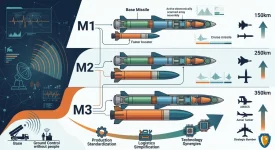
The indigenous Astra Mk1, which boasts a range of roughly 110 kilometres, is already a proven asset.
Furthermore, the Defence Research and Development Organisation (DRDO) is rapidly advancing the Astra Mk2.
Expected to be ready for fleet integration in the coming years, the Astra Mk2 features a dual-pulse rocket motor that extends its reach to 160–200 kilometres.
At an estimated cost of just Rs 7 to 8 crore per unit, the Astra Mk2 provides formidable firepower at a fraction of the Meteor's price.
By shouldering the bulk of routine combat duties, these domestic missiles ensure that the imported Meteors are saved strictly for scenarios where their unique capabilities are mandatory.
The Ramjet Edge: No Escape
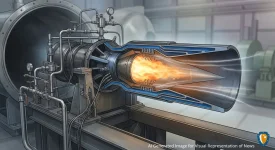
When the Meteor is deployed, it brings an overwhelming tactical advantage to the battlefield.Unlike conventional rocket-powered missiles that coast toward their targets after an initial burn, the Meteor is powered by an advanced ramjet engine.
This propulsion system allows the missile to actively throttle its speed, maintaining peak kinetic energy all the way into the final stages of an engagement.
Because it never loses its speed, the Meteor creates an exceptionally large "no-escape zone."
Even if an enemy fighter attempts aggressive, high-G evasive manoeuvres at extreme distances, the Meteor retains enough energy to track and destroy it.
This capability gives the IAF a critical edge against heavily protected adversarial support aircraft and modern regional threats, such as the PL-15 missiles fielded by neighbouring air forces.
A Calculated Arsenal for a Two-Front Threat
By capping the Meteor inventory between 350 and 500 units, India strikes the perfect balance between strategic dominance and financial prudence.This focused stockpile provides more than enough missile density to secure air superiority during a high-intensity, two-front conflict, without the crippling costs of universal fleet-wide deployment.
Ultimately, this approach reflects a maturing defence strategy: blending the unparalleled lethality of imported "overmatch" weapons with the sustainable, volume-based strength of India's rapidly expanding indigenous defence manufacturing.