- Views: 5K
- Replies: 25
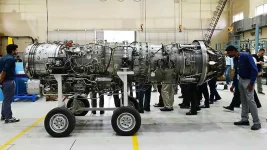
India currently holds a reserve of older General Electric (GE) F404-F2J3 engines, which were originally acquired in the early 2000s to power the technology demonstrators and initial prototypes of the Light Combat Aircraft (LCA) Tejas.
While the latest Tejas Mk1A fighters are equipped with the upgraded and more powerful F404-IN20 variant, these older engines are simply sitting unused in storage facilities.
Defence experts suggest that rather than leaving these critical assets idle, the government has a strategic opportunity to hand them over to domestic aerospace startups and established defence firms, backed by dedicated research and development (R&D) grants.
Such an initiative could provide a massive, practical push towards India's ultimate objective of achieving self-reliance in the production of high-performance military turbofan engines.
By giving private companies direct access to functional, combat-proven hardware, they can conduct in-depth tear-down analyses, study the materials used, test performance limits, and engage in controlled reverse-engineering.
This kind of physical, hands-on experience with an actual engine offers critical engineering insights that computer simulations and theoretical models simply cannot provide.
The advantages of this approach go well beyond basic repair and overhaul training.
Private defence manufacturers would have the opportunity to closely inspect complex parts like compressors, turbine blades, afterburners, and engine control units.
By analysing the real-world thermal management and metallurgical properties of these engines under local environmental conditions, Indian firms could speed up the development of homegrown propulsion systems.
This would directly support existing national projects, such as the Kaveri engine programme, and help lay the groundwork for the powerful jet engines required for future fighter aircraft and advanced unmanned aerial vehicles (UAVs).
To make this viable, government financial grants are crucial to help private companies manage the high costs associated with setting up specialised testing facilities, acquiring advanced simulation software, and hiring top-tier aerospace engineers.
The public-private partnership model has already proven successful in other areas of defence manufacturing, and applying it to jet engine development could build a strong ecosystem of innovation.
Ultimately, startups would use real hardware to validate their designs, while the country would build a valuable repository of intellectual property and technical skills to strengthen the national defence industry.
Naturally, executing this plan requires strict regulatory safeguards. Because these engines contain United States-origin technology, it is vital to strictly adhere to international export control laws and maintain strong intellectual property protections.
Implementing phased access for companies, signing robust non-disclosure agreements, and enforcing strict safety protocols for handling operational turbofans would help minimise legal and safety risks while ensuring maximum technological benefit.
The necessity of this approach is further underscored by the current supply chain crisis affecting the Tejas Mk1A programme.
Hindustan Aeronautics Limited (HAL) has faced significant delays—running more than two years behind schedule—due to the slow delivery of the newer GE F404-IN20 engines from the US, with only six units delivered by mid-2026 against a 2021 contract for 99 engines.
This heavy reliance on foreign suppliers highlights the pressing need for domestic engine manufacturing capabilities.
Using the older F2J3 engines as learning tools is a cost-effective strategy to build this expertise and develop engines tailored specifically to the requirements of the Indian armed forces.
As India aggressively pursues the goal of self-reliance in the defence sector, making creative use of available resources is a highly practical move.
Providing capable private enterprises with these older GE engines, along with the necessary financial backing, could be a pivotal step in India's quest to build its own high-performance jet engines.
Such a forward-thinking policy would not only cut down future reliance on international aerospace giants but also elevate Indian defence companies onto the global stage.
Military planners and defence industry executives must give this proposal serious consideration. Transforming these stored engines into active tools for technological research could yield immense long-term benefits for the nation's strategic independence.
The ideal time to utilise these inactive assets is right now, before they degrade further or are permanently discarded.