- Views: 6K
- Replies: 19
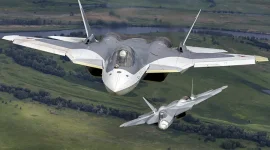
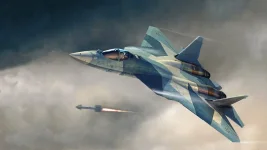
In a significant development for Indo-Russian military ties, Moscow has presented New Delhi with a fresh proposal to jointly produce at least 100 Su-57 stealth fighters on Indian soil, complete with technology transfer.
However, this large-scale offer exceeds the immediate ambitions of the Indian Air Force (IAF), which currently prefers a smaller, government-to-government procurement of roughly 40 to 60 "Felon" fighters to serve as a temporary capability boost.
To sweeten the deal, Russia has suggested establishing a manufacturing base within India, specifically eyeing Hindustan Aeronautics Limited's (HAL) Nashik facility.
This plant is well-suited for the task, having successfully built Russian Su-30MKI fighter jets under license for years.
Russian experts have already evaluated the Nashik site, demonstrating a genuine desire to relocate a portion of their advanced fighter manufacturing to India.
For the site to become a functional Su-57 assembly line, HAL is now anticipating comprehensive financial data from Moscow, which will clarify the conversion costs and the exact price per jet.
The ultimate success of this manufacturing pitch hinges on the financial figures and India's willingness to commit.
A massive order of 100 jets is seen as the minimum threshold required to make the expensive factory upgrades economically sensible.
Alongside this, Moscow has suggested breathing new life into the cancelled Fifth Generation Fighter Aircraft (FGFA) initiative—a program New Delhi famously walked away from in 2018 over stealth capability and technology-sharing disputes.
The new concept envisions a custom two-seat version of the export-grade Su-57E. Yet, the IAF remains deeply skeptical.
Funding a highly customized twin-seat stealth fighter would demand exorbitant investments and lengthy development times, making it an unappealing prospect while India channels its defence budget into other critical modernizations.
This ambitious Russian pitch arrives while the IAF is already juggling a crowded and expensive procurement schedule.
Current plans involve purchasing 114 advanced fighters under the Multi-Role Fighter Aircraft (MRFA) program, where the French Rafale F4/F5 is a strong contender.
Domestically, India is set to integrate approximately 120 indigenous Tejas Mk2 fighters.
Furthermore, the IAF has secured orders for 180 Tejas Mk1A jets to serve as the foundation of its light combat forces for the foreseeable future.
More importantly, India's own fifth-generation stealth project, the Advanced Medium Combat Aircraft (AMCA), is making steady headway, with an initial goal of 120 fighters and room for significant expansion.
Indian defence planners now face a critical crossroads: deciding whether a massive Su-57 investment fits into the nation's broader strategic vision.
While producing jets locally brings undeniable industrial perks, it threatens to siphon vital funding away from home-grown initiatives like the AMCA.
Procuring a smaller batch of 40 to 60 Su-57s off the shelf makes tactical sense, offering an immediate counter to the rapidly growing fifth-generation fleets of regional adversaries like China and Pakistan.
However, expanding that commitment to 100 locally built units would create an immense financial burden that directly clashes with the AMCA's timeline.
Adding another layer of complexity is New Delhi's quiet exploration of joining a European sixth-generation fighter consortium.
Such a move, targeted for completion around 2040, would grant India access to revolutionary aviation technologies, potentially allowing the nation to skip current fifth-generation limitations altogether.