- Views: 2K
- Replies: 2
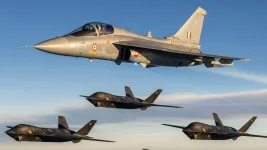
In a major step to boost the combat survivability of its indigenous fighter fleet, the Indian Air Force (IAF) is planning to equip the Light Combat Aircraft (LCA) Tejas Mk1A with the advanced X-Guard towed decoy system from Israel.
Manufactured by Rafael Advanced Defence Systems, this integration is a direct response to the evolving realities of modern aerial warfare.
Traditionally, fighter jets have relied on built-in electronic warfare (EW) systems and jammers for protection.
However, these conventional defences have become vulnerable to new "home-on-jam" (HOJ) missiles, which possess seekers specifically programmed to track and strike the very electronic jamming signals that aircraft emit for self-protection.
The X-Guard introduces a completely different philosophy for aircraft defence.
Rather than depending exclusively on the jet's internal countermeasures, this AI-enabled, fibre-optic system creates a safe physical distance between the fighter and the decoy.
Deployed from an external pod, the X-Guard is reeled out to trail securely behind the aircraft.
Once active, it generates a highly amplified, spoofed radar signature, making it appear as a far more tempting target to enemy radars than the actual Tejas fighter.
If an enemy HOJ missile is fired, it will lock onto the decoy's emissions instead of the aircraft.
Consequently, even if the missile successfully hits the X-Guard, the Tejas remains completely safe and outside the blast zone.
Open-source technical data indicates that this system maintains full electrical and fibre-optic continuity in flight and can be reeled back into its pod after a mission if it remains intact.
This active protection mechanism is vital in today's highly contested airspace.
Modern air-to-air missiles increasingly feature multi-mode seekers, allowing them to instantly switch from standard radar guidance to passively hunting down an aircraft's jamming frequencies.
Under these circumstances, a fighter's internal jammer can dangerously act as a homing beacon.
By physically moving the source of the electronic emissions away from the aircraft's main body, a towed decoy like the X-Guard successfully draws the incoming threat away from the pilot and the plane.
The Tejas Mk1A is already equipped with an advanced Active Electronically Scanned Array (AESA) radar and an upgraded electronic warfare suite.
Integrating the X-Guard will establish a robust, multi-layered defence architecture for the jet.
The aircraft's internal jammers will continue to scramble and disrupt incoming enemy radar at a distance.
If an advanced missile manages to bypass those initial defences and achieve a lock, the towed decoy will serve as a highly effective, final layer of protection.
This tiered defensive strategy is rapidly becoming the gold standard for top-tier air forces globally, especially for jets flying in hostile areas saturated with surface-to-air and air-to-air missile threats.
This upgrade aligns the Tejas Mk1A with India's broader fleet modernisation goals.
The upcoming Tejas Mk2 medium-weight fighter is already slated to feature towed decoys natively from its design phase.
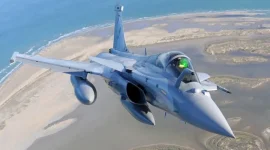
Furthermore, the IAF has reportedly utilised similar decoy systems with great success on its French-origin Rafale fleet to spoof sophisticated enemy air defence networks and secure mission objectives.
By extending this cutting-edge capability to the lighter Mk1A variant, the IAF guarantees that the fighter will remain a highly survivable and potent platform against rapidly advancing adversary missile technologies.
Operationally, adding the X-Guard significantly reduces the immense pressure on pilots during a dogfight or missile evasion sequence.
Instead of relying entirely on extreme evasive manoeuvres or manual countermeasure deployment during the critical final seconds of an engagement, pilots benefit from an autonomous shield.
Once deployed, the decoy handles the incoming threat, freeing the pilot to concentrate on repositioning the aircraft, launching a counter-attack, and successfully completing the mission.