India Edges Closer To Mastering Complex Jet Engine Tech With Latest Full Afterburner Trials of Kaveri Engine

India Edges Closer To Mastering Complex Jet Engine Tech With Latest Full Afterburner Trials of Kaveri Engine


In a landmark event for Indian aerospace capability, Defence Minister Rajnath Singh witnessed a successful full afterburner test of the indigenous Kaveri engine earlier this week.

The test, conducted at the Gas Turbine Research Establishment (GTRE) in Bengaluru on February 16, marks a critical step forward in India’s quest to develop its own high-performance jet engines for combat aircraft.

A New Spark with BrahMos Technology​

For decades, the Kaveri programme faced a persistent technical hurdle: generating enough "wet thrust" (the extra power produced when fuel is injected directly into the exhaust stream) to power supersonic fighter jets.

While earlier versions of the engine’s afterburner could only reach a combined thrust of roughly 73 kilonewtons (kN), they fell short of the power required for modern agile combat.

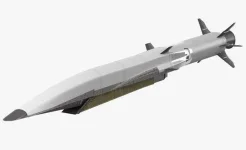
The latest test showcased a redesigned afterburner module developed in collaboration with BrahMos Aerospace, the joint venture best known for its supersonic cruise missiles.

This new system is engineered to deliver a significant boost, targeting a peak thrust of 81–83 kN.

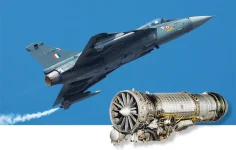
This performance leap—an increase of over 60% compared to the engine's normal operation—places the Kaveri in the same power class as the American GE F404 engine, which currently powers the Tejas Mk1 fighter fleet (rated at approximately 84 kN).

Solid Foundation: The Dry Kaveri​

The success of the afterburner builds upon the reliable performance of the core engine, known as the "Dry Kaveri" or Kaveri Derivative Engine (KDE). Recent ground and altitude trials have confirmed that this core engine can consistently deliver nearly 49–51 kN of dry thrust.

This stable baseline is already being adapted for strategic unmanned platforms. Specifically, the Dry Kaveri is slated to power the DRDO Ghatak, India’s upcoming stealth Unmanned Combat Aerial Vehicle (UCAV).

However, the addition of a functional, high-power afterburner reopens the possibility of using the Kaveri for manned fighters in the future, potentially as a powerplant for the Tejas Mk1A or as a technology bridge for the Advanced Medium Combat Aircraft (AMCA) programme.

Strategic Independence​

The ability to build jet engines is often considered the "Holy Grail" of defence technology, a capability currently possessed by only a handful of nations (the US, Russia, France, the UK, and China).

India’s reliance on foreign engines has historically been a vulnerability, creating dependency on external supply chains.

During his visit, Defence Minister Singh emphasised that mastering this technology is essential for Aatmanirbharta.

He urged scientists to accelerate development timelines, noting that while other nations took decades to mature these technologies, India must leverage Artificial Intelligence (AI) and advanced materials to close the gap rapidly.

He further stressed the need to look beyond current standards, encouraging research into sixth-generation propulsion technologies.

This successful trial signals that the Kaveri, once written off by some critics, has evolved into a potent platform.

By integrating the high-speed expertise of BrahMos with GTRE's engine core, India is edging closer to breaking the monopoly on fighter jet propulsion.
 
Congratulations to all the scientists and engineers, but the success is far from over. The weight to thrust ratio of Kaveri is still underpar, hence a single jet fighter plane will have limited capability to carry missiles and fuel, this needs reduction in weight.

My view is still, keep improving the Kaveri and use it for Tejas mk1a if GE keeps on delaying their engines. This will atleast ensure the squadron will be in a flying condition and if IAF needs them urgently, HAL can assemble them quickly and hand it over.
Yes, the engine is heavy iirc like by over 200kg. This issue is hardly ever mentioned in Kaveri news in media and defence analysts
 
So no need of safran tech? Gtre will build own engine for amca? Huge public money will be saved? Write something for these questions.

What is being developed with Safran is a different class engine capable of sustaining 2100*c+ temperature and capable of 120 kn wet thrust.
 
Just keep building testing facilities and keep developing engine. 200 to 230 k.g weight reduction is also planned with higher mass flow. We can atleast achieve replacement of GE404 and optimistically replacement of GE 414. We should try to make GTRE 25 kn with afterburner to power Jaguar fleet followed by making of Engine for Sitara and 18 seater passenger jet.
 
India has all the required technology of developing basic jet engines of 78/140 KN to as high as 1050 KN but not being passed on except Existing Lower End Core rather improved Core and SC Blades & Fan. I have given such advanced technologies.
 
Last edited by a moderator:
So no need of safran tech? Gtre will build own engine for amca? Huge public money will be saved? Write something for these questions.
Something is better than nothing.......

Technology innovations never come in the next day.....

AMCA needs the more powerful power-plant 115KN to 130KN..... though 120KN is an achievable point.....

More powerful hot section exceeding 1.5K°c.... associated subsystem with Superalloys.....

Tomorrow or within a day or two can't be an end to mature the technology...... Now achieving 85-90KN is the first goal.....
 
Neither stealth Tejas mk2 nor Stealth AMCA can replace Rafale Mod 5. Existing Rafale Mod 3 get upgraded to Mod 5, so will first batch of Mod 4 aircrafts being bought as part of 114 rafales ascwell as 36 Rafale-Marine for Aurcraft Carriers. Ezactly like French Aur Force and Charkes de Gaul Aircraft Carrier. Even Mod 3 has SPECTRA (EWS: Electronic Warfare Suite) far superior to any in the world including US f35. Amazing sensor fusion management to have similar threat identification and situation awareness as f35 but an integrated, networked AI far superior to f35 to address every threat. No way PL15 could have downed a Rafale in Op Sindoor. This is why IAF cleared purchase of non stealth Rafale priced higher than f35. F35 is small single (but powerful f135 vce engine) but Rafale is twin engine (Safran M88 single non vce engine less thrust than f135), much bigger medium weight aircraft for deep strikes. Tejas even smaller than f35 and f404 engine half the thrust of f135 on f35. Tejas mk2 compares favourably with Swedish Gripen
Sir, you are always singing the "Rafael song"..... Rafael never believes us..... No source code....

If all the conditions of HAL had been satisfied by Rafael, we would have around sixty Rafaels now in IAF...... The earlier contract was put in the dustbin.....

No one(common man) is explained of the exact reasons for price hike..... Mystry is happening after 2016.....

Now some brand new companies who don't have even a spanner of the "Required tech" is given the chance......

I have great respect for Rafael because they are able to bend some of the "mentally handicapped people" here......

Always HAL is blamed for anything & everything.....

Now 2012-14 MMRCA for HAL is converted into a private sector contracts.... Many blabbering's are seen on the electronic media just criticizing HAL not accepting that the hard working private sectors are behind the delay of the HAL projects as they are part of HAL's achievements.....

It's really sad that we unable to deliver the fruit from Rafael what this nation requires for future of the strategy of our nation....

Really Rafael is powerful now......
 

Forum statistics

Threads
7,519
Messages
66,855
Members
5,511
Latest member
Parag
Back
Top