India's long-standing mission to develop an indigenous high-thrust fighter jet engine is approaching a major milestone.
A joint venture proposal between French aerospace giant Safran and the Defence Research and Development Organisation’s (DRDO) Gas Turbine Research Establishment (GTRE) is currently awaiting final approval from the Cabinet Committee on Security (CCS).
Clearance is highly anticipated before August 15, 2026. Securing this approval just before Independence Day would offer a powerful symbolic victory for India's Atmanirbhar Bharat (self-reliance) initiatives in military aviation, fitting neatly within the broader Horizon 2047 strategic partnership between India and France.
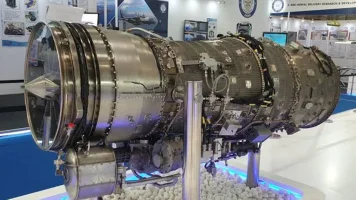
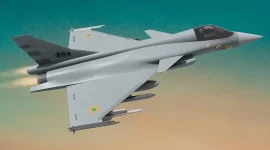
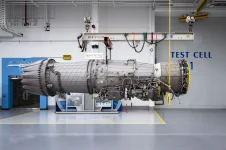
The core of this partnership is the co-development of a powerful turbofan engine in the 110 to 130 kilonewton (kN) class. This engine is specifically designed to power the AMCA Mark-2, the advanced stealth version of India’s Advanced Medium Combat Aircraft.
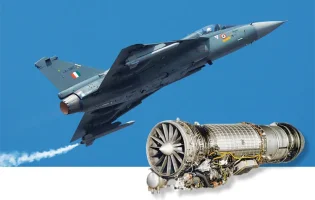
While the first squadrons of the AMCA Mark-1 will rely on American GE F414 engines as a temporary measure, the Mark-2 will fly on this new joint engine. This will finally provide the Indian Air Force with a fully sovereign powerplant for its fighter fleet.
Notably, this 110kN engine will feature a completely new core design built from the ground up to meet the AMCA's unique stealth requirements, rather than borrowing from Safran's existing M88 engine.
Its modular nature also means the engine could eventually be scaled up to power the Indian Navy's Twin Engine Deck Based Fighter (TEDBF).
Moving away from traditional off-the-shelf purchases, this agreement utilizes a co-investment model. Both Safran and GTRE will share the funding responsibilities for research and development. Hindustan Aeronautics Limited (HAL) is slated to be the manufacturing partner, utilizing dedicated assembly and testing facilities in Bengaluru.
Crucially, Safran has committed to a 100% transfer of technology. This includes sharing highly sensitive manufacturing processes, such as single-crystal turbine blade technology, which is vital for withstanding extreme engine temperatures.
Furthermore, India will retain joint ownership of the intellectual property, a significant strategic advantage over past agreements with American suppliers where core technical know-how was restricted.
The financial scope of this aerospace mega-project is substantial. Current estimates place the total cost of the program—including design, prototyping, and setting up manufacturing infrastructure—between ₹30,000 crore and $7 billion.
The development phase is expected to take 10 to 12 years, encompassing the construction and rigorous testing of up to nine prototype engines, with full-scale serial production targeted to begin around 2036.
The timing of this CCS approval carries heavy strategic weight. It aligns with India's expanding defence ties with France, which includes a separate push to locally manufacture 114 Rafale multi-role fighters.
As European nations experience internal friction regarding their own next-generation fighter programs, France is actively positioning itself as New Delhi’s most reliable, long-term partner in combat aviation.
This is especially relevant in an era where other global powers, such as the United States, frequently utilize advanced engine technology as diplomatic leverage.
For GTRE, a CCS clearance would serve as a massive vote of confidence, allowing the agency to move past the historical struggles of the Kaveri engine project by collaborating directly with a global leader. For HAL, the deal ensures a major expansion of its manufacturing footprint in Bengaluru.
However, reaching this final approval stage required immense patience, as the co-investment model demanded complex, lengthy negotiations over cost-sharing, risk allocation, and long-term production rights.
Once the CCS grants its formal approval, the partnership will shift from a policy initiative into strict contractual execution. This next phase will involve finalizing the exact schedules for technology transfer, dividing the manufacturing workshare, and setting rigid performance targets for the engine.
Given the historical delays that have plagued India's domestic engine programs, the aerospace industry will be watching closely to see if this project can maintain its timeline.
For now, the proposal's presence at the CCS is the strongest signal yet that India’s decades-old dream of building its own fighter engine is finally entering the execution phase.