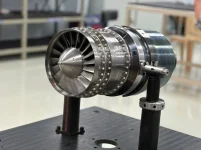
In a major step toward total self-reliance in aviation, the Council of Scientific and Industrial Research (CSIR) and the Defence Research and Development Organisation (DRDO) are drafting a joint proposal to create a homegrown turboprop engine.
This ambitious project, which will seek funding from the Ministry of Defence (MoD), aims to power the indigenous Saras Mk2 light transport aircraft and lay the groundwork for future High-Altitude Long-Endurance (HALE) Unmanned Combat Aerial Vehicles (UCAVs).
The proposal is currently in its early planning phases. Whether the MoD grants financial approval will depend heavily on the long-term manufacturing potential of the Saras Mk2 and the new engine's ability to be adapted for other civilian and military aircraft.
Because aero-engine development requires massive financial investment and long testing timelines, a strong economic justification based on volume is essential.
Currently, the Saras Mk2—a 19-seater transport aircraft spearheaded by CSIR’s National Aerospace Laboratories (CSIR-NAL)—is powered by twin Pratt & Whitney Canada PT6A-67A engines.
The PT6 family is highly regarded globally, but relying on foreign propulsion systems remains a critical bottleneck for India’s premier light transport programme. Replacing these imported powerplants is a mandatory step to achieve true manufacturing independence.
If given the green light by the government, this engine project will act as a foundational pillar for India's aerospace sector rather than a simple replacement part. Defence experts view the proposed powerplant as the base for a completely new family of turboprop engines that will serve the country for decades.
One of the most strategic applications for this engine will be in India’s future HALE UCAV projects. Large, heavily armed drones designed for long-endurance missions require highly reliable propulsion.
Having an indigenous engine will secure the supply chain against geopolitical disruptions and give Indian scientists the unrestricted freedom to integrate specific mission hardware and perform structural upgrades without needing foreign clearance.
Beyond combat drones and the Saras Mk2, a locally developed medium-power turboprop would be highly valuable for other military assets.
It could be integrated into upcoming maritime patrol platforms, specialized military surveillance planes, intelligence, surveillance, and reconnaissance (ISR) systems, and utility transport aircraft requiring long flight durations.
The ultimate financial viability of the engine, however, relies on substantial aircraft orders. The Indian Air Force (IAF) has already provided a solid starting point by committing to purchase 15 Saras Mk2 aircraft.
To bolster the numbers, CSIR-NAL is actively pitching the aircraft to regional operators to support the government's UDAN (Ude Desh ka Aam Nagrik) regional flight connectivity scheme.
While the IAF order guarantees an initial production run, securing firm orders from commercial airlines is crucial to absorbing the immense research and development costs of the new engine.
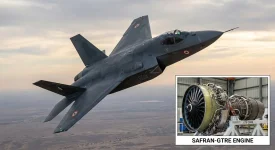
For years, India’s domestic engine development focus—such as the DRDO's GTRE Kaveri project—has been heavily heavily concentrated on jet propulsion for fighter aircraft.
This new initiative signals a strategic broadening of India's aerospace ambitions into the turboprop sector, which sees massive demand across both military and commercial markets.
Aligned with the Atmanirbhar Bharat initiative, successfully developing this engine would permanently reduce import dependency and secure India's position as a capable manufacturer of transport aircraft and unmanned aerial systems.