- Views: 1K
- Replies: 2
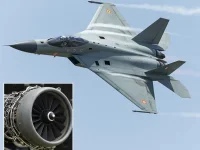
The Indian Ministry of Defence is currently deliberating a strategic move to join the Future Combat Air System (FCAS), a European sixth-generation fighter programme.
This potential partnership, involving France and Germany, marks a pivotal moment in India's long-term aerospace roadmap as the Indian Air Force (IAF) seeks to integrate cutting-edge global technologies with its domestic fighter jet developments.
A Tiered Approach to Aerial Dominance
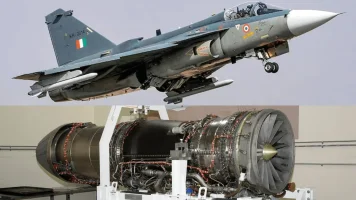
India’s current strategy focuses on establishing a robust indigenous foundation before moving toward sixth-generation capabilities.The timeline for the Advanced Medium Combat Aircraft (AMCA), India’s home-grown fifth-generation fighter, remains a priority:
- AMCA Mk1: Expected induction to begin around 2034.
- AMCA Mk2: A more sophisticated iteration slated for production from 2038 onwards.
With an estimated induction window of 2042–2043, the FCAS would provide the IAF with a "high-low" mix of advanced platforms, ensuring technological superiority well into the mid-21st century.
Internal Challenges Within the European Alliance
As of early 2026, the FCAS programme is facing internal friction.The primary hurdle involves a leadership and design dispute between France’s Dassault Aviation and Airbus, representing German and Spanish interests.
The disagreement centers on the "Next Generation Fighter" (NGF) component. While France requires a carrier-capable jet suited for nuclear deterrence, Germany seeks a modular interceptor focused on European air policing.
In February 2026, Airbus leadership suggested a "two-fighter solution" to satisfy these diverging national requirements, a move that critics argue could undermine the efficiency of a unified multinational project.
India’s Role as a Strategic Pivot
The current instability in Europe presents a unique opportunity for India.Given New Delhi’s long-standing and successful industrial partnership with Dassault—highlighted by the acquisition and local integration of Rafale fighters—India is viewed as a stabilizing and attractive partner.
For France, India offers a massive market and a reliable geopolitical ally. For India, participation would grant access to "Tier 0" technologies, including:
- Manned-Unmanned Teaming (MUM-T): Coordinating manned jets with autonomous "loyal wingman" drones.
- Next-Generation Propulsion: Advanced engine technology for sustained supersonic flight without afterburners.
- Sensor Fusion: Integrated ecosystems that provide pilots with a comprehensive, 360-degree battlefield view.
Realistic Timelines and Future Outlook
While official targets aim for 2040, many defence analysts suggest that industrial deadlocks could push actual production closer to 2045.If the European partners fail to reach a consensus on intellectual property and work-sharing by the end of 2026, the programme risks splintering into separate national projects.
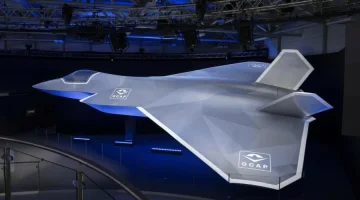
Open-source intelligence suggests that India is also keeping a close watch on the Global Combat Air Programme (GCAP)—a rival sixth-generation project led by the UK, Italy, and Japan—as a potential alternative should the FCAS negotiations stall.
Ultimately, India’s entry into the sixth-generation arena will depend on the level of technology transfer and the degree of industrial sovereignty New Delhi is granted.
Whether as a full partner in a restructured European alliance or a primary collaborator with France, India’s decision will redefine its air power for decades to come.