- Views: 1K
- Replies: 3
The Turkish press is expressing intense alarm over India's growing military alliances with Greece, Cyprus, and Armenia.
Several media commentators in Ankara are openly accusing New Delhi of instigating a "proxy war" by equipping Turkey's regional adversaries with sophisticated weaponry.
This aggressive narrative has rapidly gained traction across social media platforms, fueled by recent reports of emerging strategic partnerships and the potential export of the deadly BrahMos missile system to the Mediterranean.
This outcry is the result of several major geopolitical shifts.
Most notably, India and Cyprus recently cemented a comprehensive 2026–2031 defence roadmap that paves the way for joint military exercises, naval engagements, and the potential procurement of Indian military hardware.
Open-source intelligence indicates Cyprus is heavily interested in Indian kamikaze drones and loitering munitions to secure its Exclusive Economic Zone.
At the same time, Greece has reportedly shown a strong desire to acquire the BrahMos supersonic cruise missile.
Furthermore, Armenia has already imported more than $2 billion in Indian arms, including Pinaka multi-barrel rocket launchers, Akash air-defence missiles, and ATAGS artillery, all of which were proudly showcased during Yerevan's 2026 national military parades.
Defence experts and journalists in Turkey fear that these expanding arms agreements will fundamentally disrupt the balance of power across the Eastern Mediterranean and the Caucasus.
Some observers are even comparing the current climate to the severe tensions of the 1990s, when Cyprus attempted to deploy S-300 air-defence systems.
Additionally, Turkish news networks are broadcasting warnings that India's actions represent a strategic "encirclement" that directly threatens Ankara's interests, particularly its ambitious "Blue Homeland" maritime doctrine.
Conversely, analysts in New Delhi dismiss the idea of a targeted proxy war, arguing that these defence partnerships are perfectly legal agreements between sovereign states.
Many Indian strategic experts view these ties as a justified response to Turkey's continuous military backing of Pakistan.
Ankara's open support for Islamabad, particularly the provision of combat drones used during recent border tensions like the reported 2025 "Operation Sindoor", has not gone unnoticed.
Consequently, Indian observers largely characterize the growing Mediterranean outreach as a reciprocal move rather than an unprovoked escalation.
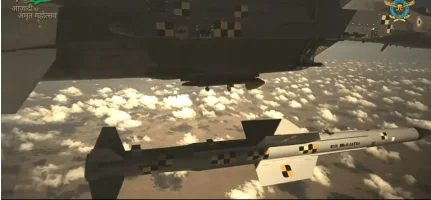
The BrahMos missile, a product of an India-Russia joint venture, remains at the heart of Turkish anxieties.
Capable of flying at speeds up to Mach 3 with a range of nearly 290 kilometres, the supersonic cruise missile is widely regarded as a battlefield game-changer.
The mere prospect of these formidable weapons being stationed in Greece or Cyprus has deeply unsettled commentators in Ankara, who are terrified that such long-range strike capabilities could easily penetrate and threaten deep into Turkish territory.
Despite the panic in the Turkish press, the Indian government has never officially stated that its arms exports are designed to counter Turkey.
New Delhi consistently frames its overseas military sales as purely commercial endeavours and strategic partnerships intended to promote regional stability and achieve self-reliance in the defence sector.
Ultimately, India continues to project itself as a responsible global supplier of arms that operates strictly within established international frameworks.
This unfolding diplomatic drama highlights the widening geopolitical rift between New Delhi and Ankara, primarily driven by their conflicting global alliances.
While Turkey maintains its unwavering alliance with Pakistan, India is systematically building relationships with nations that have historical and territorial disputes with Ankara.
However, despite the sensationalist media narratives, it is crucial to note that many of these defence pacts are still in the negotiation phase, and there are currently no confirmed reports of large-scale BrahMos missile deliveries to either Greece or Cyprus.