- Views: 2K
- Replies: 10
India is actively adopting a two-pronged strategy for its future combat aviation needs.
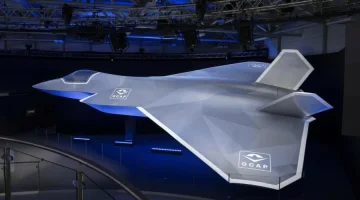
hile New Delhi is currently evaluating potential participation in European sixth-generation fighter consortia—such as the UK-led Global Combat Air Programme (GCAP) or the France-led Future Combat Air System (FCAS)—it remains completely committed to its domestic Advanced Medium Combat Aircraft (AMCA) Mk-2.
Official sources confirm that the indigenous fighter will not be sidelined; rather, it is being developed as a crucial technological bridge between fifth- and sixth-generation capabilities.
Despite the growing momentum behind a possible international partnership, India continues to push the AMCA Mk-2 forward as a highly sophisticated 5.5-generation platform packed with sixth-generation features.
The Aeronautical Development Agency (ADA) is engineering the aircraft to maintain operational dominance well into the 2040s.
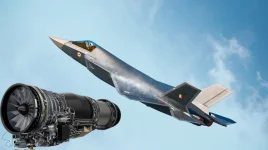
Furthermore, recent open-source reports highlight that a joint venture with France's Safran to co-develop a new 110-120 kN engine is being finalised to power this advanced fighter.
The Mk-2 is designed specifically for a future battlespace defined by artificial intelligence, complex digital networks, and manned-unmanned teaming, with first flight tests of the AMCA prototypes targeted for the late 2020s.
One of the most significant technological leaps in the Mk-2 variant is the inclusion of an artificial intelligence-powered "Electronic Pilot."
Acting as a virtual co-pilot, this system will support the human aviator by instantly fusing sensor data, automatically ranking combat threats, and managing flight controls.
This innovation is expected to drastically lower the cognitive burden on pilots, allowing for faster and sharper decision-making during high-stakes combat scenarios.
Scalability and adaptability are foundational to the new fighter's design, particularly regarding unmanned flight.
The development roadmap includes features that will allow the jet to operate optionally manned or completely autonomously.
By engineering the platform to execute dangerous missions via remote control or independent AI execution, India is aligning its domestic project with the defining characteristics of global sixth-generation aircraft.
The fundamental philosophy behind the Mk-2 revolves around a "System-of-Systems" framework, positioning the fighter as a primary command hub in the sky.
The aircraft is being tailored to interface effortlessly with a broader network of domestically produced unmanned systems. This includes direct coordination with indigenous "loyal wingman" platforms, most notably the combat-ready CATS Warrior drones.
During active combat, the human pilot aboard the AMCA will have the capability to launch and manage swarms of expendable unmanned combat aerial vehicles (UCAVs). These networked drones will conduct intelligence gathering, execute electronic warfare, or carry out targeted strikes.
Consequently, the manned aircraft can stay safely outside highly contested zones while projecting lethal force and expanding its operational footprint using these distributed assets.
To ensure the fighter can survive in heavily defended airspace, the Defence Research and Development Organisation (DRDO) is heavily funding next-generation stealth enhancements.
A major focus is the application of specialised metamaterial-based radar-absorbent coatings. These advanced materials offer broadband low observability, helping the aircraft remain invisible to a much broader range of hostile radar frequencies.
Structural stealth features are also a priority, highlighted by the integration of serpentine "S-duct" air intakes. This design geometry physically hides the highly reflective engine compressor blades from probing enemy radar waves.
Recent tests in 2026 have successfully demonstrated a 98 percent pressure recovery rate at transonic speeds, proving that the intake design can maintain maximum engine efficiency and robust stealth characteristics even during rigorous combat manoeuvres.
Looking toward the deep future, engineers are ensuring the Mk-2 possesses the immense thermal management and power generation capabilities required to host Directed Energy Weapons (DEWs).
Once integrated, these laser or microwave systems would offer an unprecedented, close-range defence mechanism capable of instantly neutralising incoming drones and anti-aircraft missiles, drastically improving the jet's battlefield survival rate.
Currently, the Indian Air Force has pledged to acquire 80 of the AMCA Mk-2 jets, though defence analysts widely expect this number to grow substantially over the coming years.
Even as international sixth-generation aircraft are projected to enter global fleets around 2040, India’s indigenous 5.5-generation fighter is positioned to serve as the backbone of the nation's combat aviation well into the mid-century.