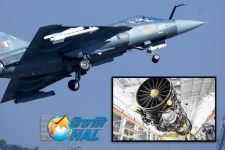
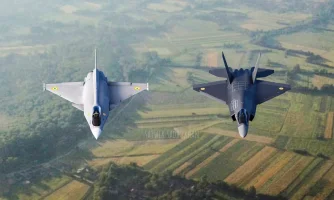
In a significant update to India's indigenous fighter program, Hindustan Aeronautics Limited (HAL) has revealed a change in the equipment timeline for the Tejas Mk1A.
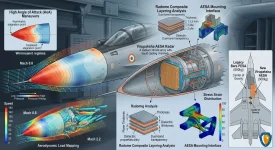
The highly anticipated home-grown Uttam Active Electronically Scanned Array (AESA) radar will no longer feature on the initial order of 83 Tejas Mk1A jets. Instead, its introduction has been pushed to the upcoming second batch of 97 aircraft.
This development was confirmed by HAL Chairman and Managing Director Ravi Kota during the company’s recent financial conference call.
Previously, the plan was to introduce the Uttam radar starting with the 41st aircraft of the first production run. However, to maintain a steady manufacturing pace, the entire first batch of 83 fighters and trainers will now be equipped with the Israeli-designed EL/M-2052 AESA radar.
The EL/M-2052 radar is currently manufactured domestically by HAL under a technology transfer agreement with Israel's defence electronics industry.
It is a highly capable system, offering the Indian Air Force (IAF) advanced features such as multi-target tracking, beyond-visual-range missile guidance, and robust electronic counter-countermeasures.
By sticking to this established system, HAL aims to avoid the complex testing and certification processes that would inevitably accompany the integration of a new radar system mid-production.
Industry experts note that this decision is primarily driven by the need to stabilise the Tejas Mk1A delivery schedule.
The manufacturing line has already experienced considerable disruptions due to global supply chain issues, most notably the delayed delivery of F404 engines from the American aerospace firm General Electric (GE).
Introducing a new radar at this critical juncture could have further stalled the induction of these vital jets into the IAF, which urgently needs to bolster its declining fighter squadron numbers.
The Defence Acquisition Council (DAC) has already cleared the procurement of the additional 97 Tejas Mk1A jets, where the Uttam radar will finally make its operational debut.
The Uttam AESA radar, designed by the Defence Research and Development Organisation (DRDO), remains a cornerstone of India's push for self-reliance in aerospace technology.
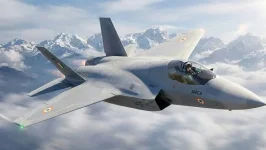
It has already undergone rigorous flight testing on prototype aircraft and is also slated for integration into future platforms like the Tejas Mk2 and the upgraded Su-30MKI "Super Sukhoi" fleet.
HAL also clarified that it will not manufacture the Uttam radar in-house. Rather, DRDO will select a private industrial partner for mass production, from whom HAL will procure the units for the second batch of Tejas fighters.
This strategic deferment ultimately allows HAL to focus on immediate delivery targets while paving the way for complete radar indigenisation in the very near future.