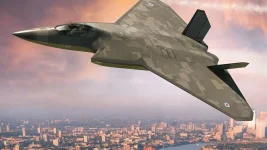
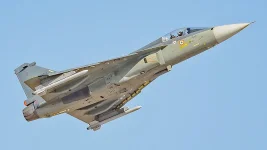
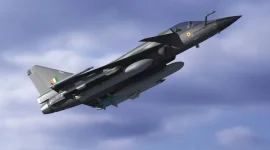
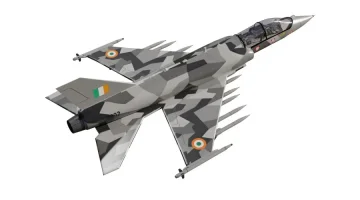
Hindustan Aeronautics Limited (HAL) is actively accelerating the development of India's next-generation Medium Weight Fighter (MWF) by launching a new industrial outreach initiative for the Light Combat Aircraft (LCA) Tejas Mk2 programme.
The aerospace giant has recently issued a specialised tender for the CNC machining and delivery of vital components dedicated to the aircraft's second prototype, known as PV2.
This strategic move highlights HAL's commitment to distributed manufacturing and strict production timelines as the nation fast-tracks the development of this advanced indigenous fighter jet.
The newly released tender is specifically designed to secure precision machining for highly critical aerospace components.
By doing so, HAL is deliberately broadening its network of private-sector partners to handle the escalating production requirements of the Mk2 initiative.
This collaborative strategy mirrors other recent advancements in the programme, such as the involvement of agencies like the Council of Scientific and Industrial Research-National Aerospace Laboratories (CSIR-NAL) in developing primary aerostructures.
Ultimately, this represents a comprehensive, ecosystem-driven strategy to build modern combat aircraft within the domestic defence sector.
One of the most striking elements of this tender is its highly compressed delivery timeline.
Selected vendors will be mandated to finish the component manufacturing process within just 16 weeks of receiving the necessary raw materials, CAD models, and blueprints.
This urgency reflects HAL's determination to shorten the prototype assembly phase and sustain the programme's rapid momentum.
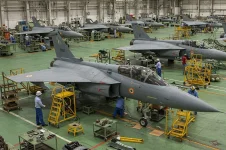
With the first prototype currently in its final assembly stages and targeting a maiden flight by mid-2026, fast-tracking the second prototype (PV2) is essential to keep the rigorous flight-testing schedule on track.
Furthermore, the tender enforces strict aerospace-grade security and documentation protocols, requiring suppliers to return all technical drawings when submitting their financial bids.
The financial conditions detailed in the document demonstrate HAL's disciplined approach to defence procurement.
Bidders must provide individual pricing for each item, and these rates will remain locked for the entire duration of the contract, explicitly barring any future price escalation requests.
In a clear effort to optimise production costs, manufacturers are also required to account for scrap metal value during the machining process.
Additionally, the financial structure is strictly performance-based, with HAL promising 100 percent payment only after the finished components have been delivered and thoroughly inspected for quality acceptance.
To maintain absolute oversight over the quality of the base components, HAL will directly supply the necessary raw materials, tools, and measurement gauges to the chosen vendors.
The private partners will focus entirely on the precision machining execution before returning the completed parts to HAL's assembly facilities.
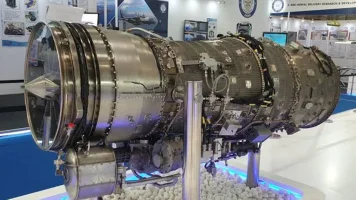
This ensures the structural integrity required to handle the immense capabilities of the Tejas Mk2, which will be powered by the more robust GE F414-INS6 engine.
The tender also includes a clause allowing HAL to place repeat orders of up to 100 percent of the original quantity within a specified period, signalling the company's readiness to rapidly scale up production efforts as the testing phases progress.
Looking at the broader strategic impact, the tender actively encourages the participation of Micro, Small, and Medium Enterprises (MSMEs) by incorporating specific compliance guidelines, such as Udyog Aadhaar registration.
This highlights the Indian government's ongoing mission to weave smaller domestic businesses into the fabric of high-value defence manufacturing.
By engaging private suppliers through structured, fast-paced tenders like this one, India is steadily establishing a resilient and highly capable domestic supply chain, ensuring the country is well-equipped to support complex, next-generation aerospace endeavours.