- Views: 2K
- Replies: 7
As India accelerates its pursuit of homegrown aero-engine technology, a former senior official from the Gas Turbine Research Establishment (GTRE) has emphasised the urgent need to protect the manufacturing mastery established at Hindustan Aeronautics Limited (HAL) in Koraput.
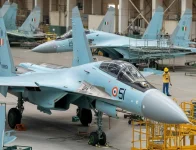
The official cautioned that the deep practical knowledge gained from building the Russian AL-31FP turbofan engines for the Su-30MKI fighter fleet must be seamlessly transferred to future domestic programmes before the production line eventually closes.
This call to action comes in the wake of a ₹26,000 crore contract signed in late 2024 for HAL to manufacture an additional 240 AL-31FP engines over an eight-year period, aiming for an indigenisation level of up to 63%.
Speaking to sources, the former GTRE expert observed that HAL’s Koraput division has acquired highly specialised manufacturing techniques over its years of licensed production.
However, he pointed out that this wealth of industrial capability has largely remained isolated within that specific facility.
Throughout the AL-31FP's production run, HAL engineers have successfully executed highly intricate procedures.
Working from imported Russian master alloy ingots, the facility has managed directionally solidified and single-crystal blade casting, alongside precision machining and complex heat treatments, entirely on Indian soil.
Yet, despite Koraput successfully absorbing these critical skills, the official noted that there was never a systematic effort to share this knowledge with other national propulsion bodies, such as the Defence Metallurgical Research Laboratory (DMRL) or the GTRE.
This lack of technological cross-pollination is seen as a major missed opportunity for India’s defence manufacturing sector.
The former official stressed that capabilities such as electron beam welding, advanced nickel-based superalloy processing, and the creation of single-crystal turbine blades are absolutely vital for modern military aviation.
Describing these skills as "strategic manufacturing assets," he noted that their applications extend far beyond fighter jets, being equally critical for marine gas turbines and the turbopumps used in cryogenic rocket engines.
While HAL Koraput already holds this expertise, it has been treated as programme-specific rather than being integrated into a broader national propulsion strategy.
One highly specialised area of concern is electron beam welding, which is essential for assembling advanced rotor components.
The former official warned that if the engineers currently dedicated to the AL-31FP are not eventually transitioned to indigenous projects, decades of hands-on, practical experience could simply vanish once licensed production ends.
He further highlighted that while the initial technology transfer agreement with Russia included comprehensive documentation for building the engine, this industrial intelligence stayed at HAL and was never leveraged for indigenous design efforts.
As a direct consequence, India’s Kaveri engine programme was forced to progress almost entirely independently, failing to benefit from the advanced manufacturing experience that HAL had already secured.
The former official also drew attention to another glaring gap in India’s aero-engine infrastructure: the lack of a permanent, dedicated Flying Test Bed (FTB).
An FTB is a modified aircraft used to evaluate experimental engines under real-world flight conditions before they are cleared for use on operational fighters.
These aircraft carry extensive sensors to monitor thrust, stability, vibration, and fuel efficiency in a dynamic environment that ground testing cannot accurately simulate.
While leading aerospace nations typically use large four-engine transport planes like the Il-76, Boeing 747, or Airbus A340 as testbeds, India currently lacks a permanent large-scale FTB of its own.
During earlier phases of the Kaveri project, India had to rely on a Russian Il-76 testbed operated by the Gromov Flight Research Institute to conduct critical flight evaluations.
Recently, India has adapted an older Tejas Mk1 airframe to serve as a testbed for the 73 kN Kaveri engine variant, but a heavy transport aircraft remains the global standard for testing larger future engines.
Establishing a permanent indigenous flying testbed must become a national priority, the official argued, particularly as India moves to develop the 90 kN Kaveri 2.0 and the heavier 110–120 kN engine required for the Advanced Medium Combat Aircraft (AMCA).
Without a domestic facility, India will remain reliant on foreign infrastructure for the final stages of flight qualification, thereby limiting true technological independence.
Ultimately, the former official stated that India’s future aerospace propulsion ecosystem must be built on three foundational pillars: safeguarding the manufacturing expertise at HAL Koraput, widely sharing advanced metallurgy and production techniques across DRDO laboratories, and establishing a dedicated indigenous flying testbed to support complete, end-to-end engine development within the country.