- Views: 42
- Replies: 1
The Indian Air Force (IAF) has been recognised as the sixth most formidable aviation force globally in the 2026 World Directory of Modern Military Aircraft (WDMMA) Global Air Powers Rankings.
In a significant strategic milestone, this placement ranks India ahead of the Chinese People’s Liberation Army Air Force (PLAAF), which secured the seventh position on the global index.
Rather than relying on a simple head-to-head count of aircraft, the WDMMA utilises a proprietary formula known as the TruVal Rating (TvR) to evaluate military aviation.
This comprehensive metric assesses a wide array of factors, including technological sophistication, logistical support, fleet diversity, and offensive and defensive capabilities.
By focusing on these elements, the ranking paints a realistic picture of an air force's actual combat readiness and its ability to sustain complex operations in modern warfare.
The United States Air Force continues to dominate the global arena, taking the number one spot with a commanding TvR score of 242.9.
American forces largely fill the upper echelons, with the US Navy claiming second place and the Russian Air Force taking third. The US Army and US Marine Corps sit in the fourth and fifth positions.
Earning an impressive TvR of 69.4, the Indian Air Force comfortably secured the sixth spot, edging past China’s score of 63.8.
The latest rankings also underline the growing strategic weight of the Indo-Pacific theatre.
Prominent forces such as the Japanese Air Self-Defense Force, the Israeli Air Force, and the French Air and Space Force all ranked behind India and China.
Additionally, open-source data reveals that despite its close military cooperation with Beijing, the Pakistan Air Force placed significantly lower on the index at 18th position with a TvR of 46.3.
This international recognition arrives as the IAF executes one of its most ambitious fleet overhauls in history.
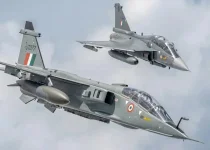
The force is actively bolstering its squadrons with indigenous LCA Tejas Mk1A fighters and advanced Rafale jets, while simultaneously upgrading its heavy-fighter backbone through the "Super Sukhoi" programme for the Su-30MKI.
To secure its future dominance, the IAF is also laying the groundwork for the Tejas Mk2 and the fifth-generation Advanced Medium Combat Aircraft (AMCA), alongside the acquisition of vital force multipliers like aerial refuelling tankers and airborne early warning platforms.
A major pillar of the IAF's high rating is its unparalleled operational versatility.
Indian aviators routinely execute missions in some of the most unforgiving environments on the planet, transitioning from the freezing, thin air of the high Himalayas to expansive maritime patrols across the Indian Ocean.
The IAF’s regular participation in complex, multinational exercises with other leading air forces continuously sharpens its tactical edge and interoperability.
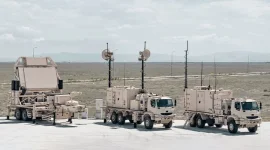
Modern air dominance heavily relies on network-centric warfare, an area where India has made massive investments.
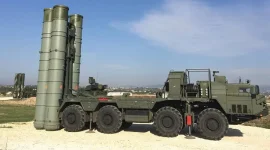
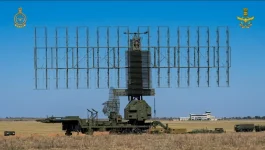
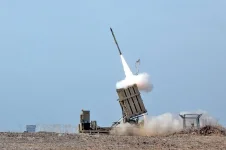
The implementation of the Integrated Air Command and Control System (IACCS), combined with the deployment of the advanced S-400 Triumf air-defence system, has revolutionised India's airspace management.
The steady integration of indigenous missiles, cutting-edge sensors, and advanced electronic warfare suites further fortifies the nation's robust defence architecture.
While China’s PLAAF holds a stark numerical advantage—boasting over 3,700 aircraft compared to India's roughly 1,716—and has rapidly introduced advanced assets like the J-20 stealth fighter, the WDMMA methodology proves that raw numbers do not equate to operational superiority.
The index heavily rewards fleet balance, pilot training, and logistical maturity.
Although military rankings are analytical estimates rather than absolute predictors of combat outcomes, they provide a valuable global benchmark that clearly highlights the Indian Air Force's exceptional capability, readiness, and growing international stature.