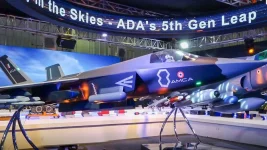
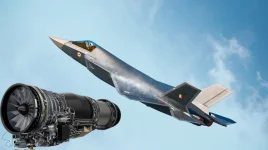
As the country pushes forward with the Advanced Medium Combat Aircraft (AMCA) programme, defence circles are beginning to debate the necessity of a much larger stealth jet.
Dubbed the Advanced Heavy Combat Aircraft (AHCA), this conceptual 5.5-generation fighter would be designed to work alongside the AMCA in the coming decades.
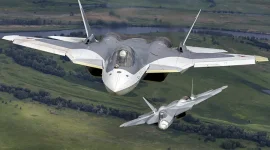
This proposed heavyweight platform would fill a strategic role comparable to the large stealth fighters fielded by other global military powers, such as China's J-20 or America's F-22.
It would incorporate a highly stealthy airframe coated in advanced radar-absorbent materials, alongside spacious internal weapon bays meant for heavier missiles.
Additionally, it would be equipped with a cutting-edge Gallium Nitride (GaN) radar, offering detection ranges and electronic warfare abilities far exceeding those of today's systems.
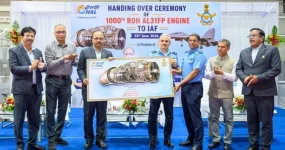
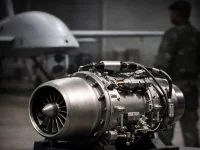
To avoid delays associated with waiting for a brand-new engine, early proposals suggest powering the aircraft with twin AL-31FP turbofans, currently produced in India by Hindustan Aeronautics Limited (HAL).
These engines would provide around 240 kN of total thrust, ensuring the fighter could enter operational service on schedule.
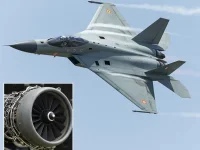
Looking further into the future, the AHCA could eventually be upgraded with powerful, domestically built engines based on the 120-140 kN class currently being developed for the AMCA Mk2.
This engine swap would drastically enhance the aircraft's speed, fuel economy, and ability to supercruise, all while ending the nation's reliance on foreign engine technology.
Proponents of the AHCA stress that the Indian Air Force (IAF) will inevitably need a heavy stealth aircraft for missions that the medium-weight AMCA cannot handle.
A larger airframe means significantly more internal fuel capacity, extending the jet's operational reach across the vast Indo-Pacific and Indian Ocean Region.
Crucially, it would also provide the internal volume required to conceal large standoff missiles, hypersonic glide vehicles, and heavy electronic warfare pods without compromising its stealth profile.
Beyond weapons and fuel, a heavier aircraft generates more electrical power and offers superior cooling capabilities.
This extra power is essential for supporting the energy-hungry systems expected to dominate future aerial warfare, such as directed-energy weapons, complex sensor fusion networks, and the most advanced radar arrays.
Ultimately, this heavy stealth fighter is viewed as a natural successor to the IAF's formidable Su-30MKI fleet, which is currently slated to receive a massive "Super Sukhoi" upgrade to keep it flying well into the 2040s.
Post-2045, the AHCA could seamlessly step into the Su-30MKI's shoes, executing deep-strike, air dominance, and maritime missions while acting as a flying command centre.
Despite the clear tactical benefits, starting a massive heavy stealth fighter project immediately would bring severe hurdles.
The AMCA is currently the nation's top aviation priority, demanding immense financial backing and engineering focus over the next ten years.
Attempting to design a second, entirely new stealth aircraft at the same time could easily overwhelm the country's defence research agencies, HAL, and the broader private sector.
Propulsion remains a major bottleneck. India’s high-thrust indigenous engine project is still in the developmental phase, making it far safer to perfect this technology on the AMCA before relying on it for a much heavier jet.
Furthermore, the domestic aerospace manufacturing base is already stretched thin.
With ongoing work on the Tejas Mk1A and Mk2, the naval Twin Engine Deck Based Fighter (TEDBF), autonomous drone systems, and various helicopter projects, injecting a heavy stealth fighter into the mix could cause severe delays across all these critical programmes.
Rather than rushing into full-scale development, defence analysts suggest initiating a focused, low-cost conceptual study phase.
This approach would allow the country's top aeronautical agencies and private firms to map out exact military requirements, test digital designs, and evaluate different engine options without spending billions on physical prototypes.
Fortunately, much of the foundational technology needed for a heavy stealth fighter—such as advanced sensors, AI-driven avionics, composite materials, and electronic warfare suites—is already being created for the AMCA.
Adapting these existing innovations for a larger airframe would drastically cut down both the financial costs and the risks of project failure.
By the middle of the next decade, when the AMCA is actively flying in IAF squadrons and domestic engine manufacturing has stabilized, the Indian defence industry will be perfectly positioned to begin physically building a heavy stealth fighter.
Creating an AHCA would also open new doors in the global arms market. While the AMCA will compete against other medium-weight fighters, a long-range, heavy-payload stealth jet could attract international buyers looking for top-tier, multi-role power projection.
Ultimately, the logic for developing an Advanced Heavy Combat Aircraft is incredibly sound, provided it is treated as a long-term replacement for the Su-30MKI rather than an immediate distraction from the vital AMCA project.