- Views: 2K
- Replies: 4
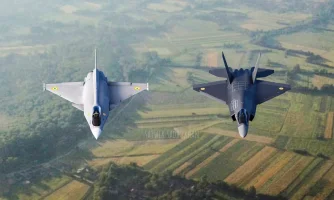
The Indian Air Force (IAF) is scheduled to conduct a thorough evaluation of the Light Combat Aircraft (LCA) Tejas Mark 1A programme this coming May.
This critical review will serve as the deciding factor for the commencement of deliveries for the indigenous fighter jets, which have faced significant delays.
According to recent reports, the assessment aims to verify the project's current standing before the Air Force formally agrees to accept the aircraft.
The IAF currently has 180 of these advanced fighters on order, secured through two separate contracts—an initial deal for 83 jets signed in 2021 and a follow-on order for 97 aircraft approved more recently.
The trajectory of the Tejas Mk1A programme was previously scrutinised during high-level discussions in December 2025.
With several major defence aviation initiatives projected to hit essential targets by April 2026, the Air Force has decided to re-examine the Tejas timeline in May.
Defence sources indicate that a concrete delivery schedule will only be established following this upcoming evaluation. The Air Force is reportedly insistent on ensuring the fleet is fully operationally ready before induction, refusing to compromise on capability for the sake of speed.
On the industrial front, Hindustan Aeronautics Limited (HAL) has asserted its readiness to begin supplying the fighters.
Company officials have confirmed that five Tejas Mk1A jets are completely assembled and combat-ready, featuring fully integrated critical systems such as modern AESA radars, electronic warfare (EW) suites, and weapon compatibility.
From HAL’s standpoint, these aircraft adhere to the stringent configuration requirements aimed at bolstering the IAF's combat potential and are available for immediate handover.
Despite the manufacturer's assurances, the induction schedule has slid past its original deadlines.
The IAF was initially expected to receive the first batch of these fighters last year. However, the service has maintained a strict policy of only inducting jets that are fully mission-capable rather than accepting platforms that might require retrospective retrofitting.
This firm stance highlights the Air Force’s urgent requirement for frontline assets that can be deployed immediately to address dwindling squadron strength, particularly following the phase-out of older fleets like the MiG-21.
A major industrial breakthrough for the programme occurred on 17 October, when the first Tejas Mk1A prototype successfully completed its maiden flight from HAL’s facility in Nashik.
This development marked the operationalisation of a third production line, augmenting the two existing lines in Bengaluru. This expansion is pivotal for HAL to execute the massive order book effectively and accelerate the production rate to meet the Air Force’s induction goals in the coming years.
The primary cause of the schedule slippage has been identified as supply chain bottlenecks, specifically regarding the GE F404-IN20 engines that power the jets. These disruptions severely impacted the manufacturing tempo over the last year.
While HAL has managed to keep approximately 15 aircraft in various stages of readiness—with expectations to reach nearly 20 by year-end—the final delivery capabilities remain heavily dependent on the stabilisation of component supplies from global partners.
Consequently, the review in May represents a watershed moment for the Tejas Mk1A project.
For the Indian Air Force, the priority remains securing a fleet that meets all operational parameters without exception.
For HAL, the review offers a platform to prove that production hurdles are being resolved and that the indigenous aerospace ecosystem can deliver on its promises.
The results of this assessment will essentially dictate the pace of India’s fighter squadron modernisation and serve as a litmus test for the country's "Atmanirbhar Bharat" (self-reliant India) ambitions in defence manufacturing.