- Views: 1K
- Replies: 2
As the Indian Air Force (IAF) prepares for a significant fleet expansion, a strategic debate is emerging regarding the optimal configuration of its future fighter jets.
With the proposed acquisition of 114 Multi-Role Fighter Aircraft (MRFA), the focus has shifted to whether India should cap its intake of the "F4" variant to transition more quickly to the upcoming, highly advanced "F5" standard.
The Current Roadmap: F4 as the Immediate Step
According to current projections, the initial batch of 18 Rafale jets, manufactured in France, is expected to arrive starting in March 2030.These aircraft will be built to the F4 standard, which offers better sensors, enhanced electronic warfare suites, and improved connectivity compared to the F3R models currently stationed at Ambala and Hasimara.
While these French-made units arrive, the "Made-in-India" Rafales—to be produced through a partnership involving Dassault Aviation and Indian entities like Tata Advanced Systems—are slated for induction around 2031–2032.
This delay accounts for the time needed to establish local production lines and stabilize complex supply chains.
The F5 Evolution: A Generative Leap
While India inducts the F4, the French Air and Space Force is scheduled to receive the first Rafale F5 units by 2030Industry experts describe the F5 not just as a routine update, but as a "doctrinal shift" in aerial combat.
Key features of the F5 standard include:
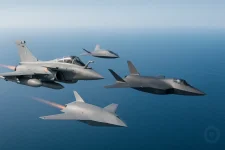
- Manned-Unmanned Teaming (MUM-T): The F5 will act as a "mother ship," controlling a fleet of autonomous stealth drones derived from the nEUROn programme.
- Enhanced Propulsion: The aircraft is expected to feature an upgraded Safran M88 engine (the T-REX evolution), providing nearly 20% more thrust. This allows for heavier payloads and better performance in high-altitude regions like Ladakh.
- Advanced Networking: Utilising a new fibre-optic "nervous system" and Gallium Nitride (GaN) radar technology, the F5 is designed to detect stealth threats and operate in highly contested environments.
Strategic Recalibration: F4 vs. F5
Recent reports suggest the current 114-jet proposal may be structured to deliver the first 90 units in the F4 configuration, with the final 24 units arriving as F5 variants.However, a growing sentiment within the defence community suggests India might benefit from reducing the F4 order—perhaps to 50 units—to free up resources and production slots for the superior F5 standard as it matures in the early 2030s.
Such a move would align the IAF with global trends toward distributed combat and "loyal wingman" drone ecosystems.
Furthermore, the deal reportedly includes a clause allowing India to eventually upgrade its entire Rafale fleet (including the original 36 F3R jets) to the F5 standard, ensuring long-term technological parity.
Looking Ahead
The decision rests on several variables, including the progress of India’s indigenous Advanced Medium Combat Aircraft (AMCA) and the urgency of addressing the dwindling squadron strength, which currently sits at approximately 30 against a sanctioned 42.By 2035, the Rafale F5 could serve as the vital technological bridge needed until India's fifth-generation indigenous platforms reach full operational status.