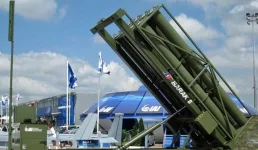
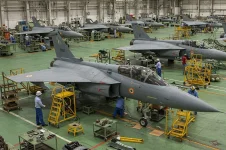
The Indian government is fast-tracking the large-scale domestic production of the Rampage supersonic air-to-ground missile.
This decision comes after the Israeli-designed weapon proved highly effective during the Indian Air Force’s (IAF) Operation Sindoor in May 2025.
Deployed from Su-30MKI and Jaguar jets, the missile successfully struck terrorist camps in areas like Bahawalpur and Muridke across the border.
Its flawless performance has deeply reinforced the Indian defence establishment's trust in the weapon's precision capabilities.
Encouraged by these results, New Delhi is taking steps to dramatically increase its stockpile while cutting reliance on external suppliers.
Driven by the "Make in India" initiative, the military is shifting away from emergency foreign purchases.
Instead, the focus is now on licensed local manufacturing. This move is designed to lower per-unit expenses and secure long-term strategic independence for the nation's armed forces.
Within the Indian military, the Rampage has been officially named the High Speed Low Drag-Mark 2 (HSLD-Mk2).
This new designation marks its full integration into the country’s locally managed arsenal of precision strike weaponry.
The HSLD-Mk2 fills a crucial role in India’s growing inventory of stand-off weapons. Originally adapted from Israel's EXTRA artillery rocket, the Rampage offers a much faster and more cost-effective production cycle compared to conventional cruise missiles.
Weighing in at roughly 570 kilograms and carrying a 150-kilogram blast-fragmentation warhead, its compact design means it can be fitted onto various fighter planes without requiring extensive structural changes.
Defence planners value the system because it delivers exceptional long-range accuracy at a fraction of the usual cost.
During flight, the missile reaches supersonic speeds ranging from Mach 1.0 to Mach 1.6.
It utilises a ballistic-style path before dropping into a steep, near-vertical dive during its final approach.
Guided by an advanced GPS and inertial navigation system, this terminal trajectory makes it devastatingly effective against reinforced targets like communication hubs, radar installations, air defence networks, and military runways.
Furthermore, with an operational range of 150 to 250 kilometres, Indian pilots can safely launch the weapon from well beyond the reach of hostile surface-to-air missile threats.
terrorist
A major benefit of the HSLD-Mk2 programme is its seamless compatibility with India's diverse fleet of combat aircraft.
The weapon has already been structurally and electronically linked to the Su-30MKI multirole fighters and Jaguar deep penetration strike aircraft that utilised the missile during Operation Sindoor.
Furthermore, integration has expanded to the IAF's MiG-29 fighters and the Indian Navy’s MiG-29K carrier-based jets, providing the military with a flexible, ready-to-use strike option across different branches.
Because of its lightweight build, a single aircraft can carry multiple missiles per sortie, enabling saturation-style strikes that can easily overwhelm enemy air defence grids.
Defence experts note that a large, locally built inventory of these weapons will drastically improve India's capacity to conduct rapid Suppression of Enemy Air Defences (SEAD) missions in future conflicts.
The push for domestic manufacturing will roll out in three distinct stages.
The initial phase, spanning late 2026 to early 2027, will rely on Semi-Knocked-Down (SKD) assembly. During this period, crucial parts and kits will be imported, but the final assembly, quality checks, and system integration will take place on Indian soil.
This strategy ensures the rapid build-up of missile stocks while local industrial infrastructure is upgraded.
Moving into the second phase between 2027 and 2028, the emphasis will shift toward complete indigenisation.
Indian defence companies, including major public and private sector players, will begin manufacturing essential components locally.
This will cover everything from the missile's physical airframe and control surfaces to its guidance electronics and mission computers.
The ultimate goal is to virtually eliminate reliance on foreign parts, which will drive down the cost of each missile even further.
Finally, the post-2028 phase envisions expanding production capacity to cater to the global export market.
As the international need for budget-friendly, high-precision standoff weapons grows, a fully indigenised HSLD-Mk2 could become a highly attractive option.
By offering a reliable and economical alternative to pricey Western equivalents, India aims to supply this advanced missile system to friendly allied nations around the world.