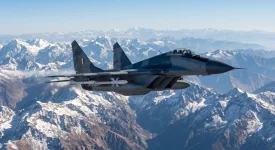
In a massive push to modernise its fighter pilot training pipeline, the Indian Air Force (IAF) has initiated a mega procurement plan for approximately 150 next-generation Stage-III (F) jet trainers.
The Ministry of Defence recently released a Request for Information (RFI) to evaluate potential Indian and global suppliers.
This initial market survey aims to find a robust replacement for the IAF’s current fleet of BAE Hawk Mk-132 aircraft, which have served as the backbone of advanced training since their induction in 2008.
Defence analysts estimate the potential deal could be worth around ₹15,000 crore.
Bridging the Gap to Frontline Combat
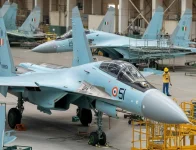
These 150 new aircraft will serve as the crucial final stepping stone for rookie pilots before they are assigned to operational combat squadrons.As the IAF continuously upgrades its fleet with 4.5 and 5th-generation fighter jets like the Rafale, Tejas Mk-1A, Sukhoi-30 MKI, and the upcoming Advanced Medium Combat Aircraft (AMCA), trainees require highly sophisticated platforms to match.
A modern trainer fleet ensures that young pilots can smoothly handle the complex weapons, sensors, and tactical environments they will face in active service.
Unlike basic propeller planes, Stage-III jets must closely simulate real combat scenarios.
According to the RFI’s advanced technical requirements, the IAF is looking for cutting-edge capabilities, including fly-by-wire control systems, glass cockpits, and "zero-zero" ejection seats capable of safely launching a pilot even at zero altitude and zero speed.
Furthermore, the jets must feature embedded virtual avionics, electronic warfare (EW) suites, and compatibility with India’s NavIC satellite navigation system.
A key demand is the ability to link the aircraft to a 360-degree dome simulator through a Live-Virtual-Constructive setup, which allows pilots to practice beyond-visual-range missile tactics and radar operations mid-flight.
A Boost for Domestic Defence Manufacturing
This massive procurement project is poised to significantly energise India’s domestic aerospace industry.The RFI reportedly aligns with the "Buy (Indian) or better" procurement category, highlighting the government's strict emphasis on local production, technology transfer, and supply chain integration.
For foreign aerospace manufacturers, simply exporting a finished aircraft will not secure the deal.
Companies will need to outline clear plans for indigenous manufacturing, demonstrating how much of the aircraft and its components will be produced on Indian soil.
This approach promises to deepen India's domestic expertise in avionics, aircraft maintenance, and advanced manufacturing capabilities.
The Top Contenders
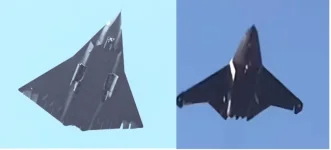
The global aerospace market features several proven platforms ready to compete for the lucrative contract.- HAL HLFT-42: Hindustan Aeronautics Limited (HAL) is heavily expected to pitch its indigenous HLFT-42 (Hindustan Lead-in Fighter Trainer). Unveiled as a scale model at Aero India 2023, the HLFT-42 is being designed from the ground up as a supersonic advanced trainer with full combat capabilities.
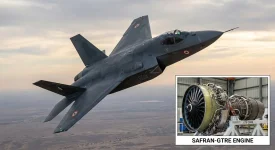
- Global Options: On the international front, the Boeing-Saab T-7 Red Hawk (USA/Sweden) and the KAI T-50 Golden Eagle (South Korea) are strong candidates due to their established track records in fighter-oriented pilot training. Other potential entrants include the Leonardo M-346 Master from Italy and the Russian Yakovlev Yak-130.
Timelines and the Road Ahead
The IAF has set a deadline of October 5, 2026, for aerospace manufacturers to submit their responses to the RFI.Using this market data, the air force plans to freeze its technical requirements and issue a formal, binding Request for Proposal (RFP) by December 2027.
Following extensive trials on a no-cost, no-commitment basis, the final delivery schedule mandates that the newly selected aircraft begin arriving within 60 months of the contract being signed.
While it will take several years for the new fleet to officially enter service, initiating the groundwork today ensures that the Indian Air Force will be equipped with a modern, high-tech training fleet to prepare its next generation of aerial combatants.