The Indian Navy is accelerating a comprehensive plan to arm nearly all of its primary surface warships with the BrahMos supersonic cruise missile by the year 2030.
Motivated by strategic successes and tactical lessons learned during Operation Sindoor, the naval force is significantly upgrading its long-range precision strike capabilities to maintain maritime dominance across the Indo-Pacific region.
Currently, the Navy operates around 20 frontline warships equipped with the formidable BrahMos system, following the rapid induction of more than six capable vessels in the last year alone.
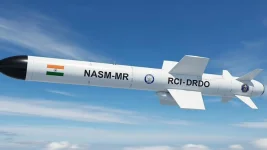
A product of a highly successful Indo-Russian joint venture, the BrahMos missile flies at speeds of nearly Mach 2.8, making it one of the fastest and most evasive anti-ship cruise missiles in the world.
As part of a fleet-wide modernisation effort, older legacy warships are undergoing major refits to replace outdated surface-to-surface missiles with the advanced BrahMos ecosystem.
Future naval platforms are being designed from the ground up to feature this massive firepower.
All upcoming stealth frigates, such as the Project 17A vessels—including INS Udaygiri, INS Himgiri, and INS Mahendragiri—will come standard with vertical-launch systems (VLS) tailored specifically for the BrahMos.
Furthermore, modern guided-missile destroyers, such as those in the Visakhapatnam-class (Project 15B), are being fitted with up to 16 vertical launcher cells, vastly increasing the sheer volume of their offensive payload.
This extensive maritime upgrade has strong backing from the highest levels of the government.
In February 2024, the Cabinet Committee on Security (CCS) approved the procurement of over 220 BrahMos Extended Range (ER) missiles for the Navy.
Thanks to India's entry into the Missile Technology Control Regime (MTCR) in 2016, the striking range of these supersonic missiles has been successfully increased from the original 290 kilometres to well over 400 kilometres.
Subsequent government approvals in 2025 have further accelerated the acquisition of dedicated fire-control systems and secondary launchers to ensure smooth integration across the fleet.
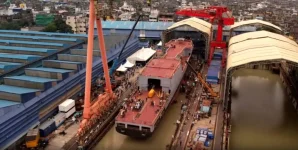
By combining the unmatched speed of the BrahMos with indigenous warship manufacturing, the Indian Navy is building a highly self-reliant defence infrastructure.
This strategic expansion will not only serve as a powerful deterrent against regional maritime threats but also firmly establish India's naval authority throughout the coming decade.