The Indian Navy’s Project 18 Next-Generation Destroyer (NGD) programme is shaping up to be the nation's most significant naval surface warship endeavour since independence.
Naval Headquarters, alongside the Warship Design Bureau (WDB), is aiming for an extended production run of 10 to 12 heavily armed stealth destroyers.
Reports indicate that production will involve major domestic shipyards such as Mazagon Dock Shipbuilders Limited (MDL) and Garden Reach Shipbuilders & Engineers (GRSE), with the vessels expected to feature around 75% indigenous components to support the Atmanirbhar Bharat initiative.
This ambitious plan represents a substantial change in both military strategy and industrial production for the Indian Navy.
In the past, the Navy has typically ordered major warships in smaller batches of three or four, as seen with the Project-15A Kolkata-class and Project-15B Visakhapatnam-class destroyers.
The strategy for Project 18 departs completely from this historical trend.
Rather than building a small number of ships merely to demonstrate new capabilities, the Navy intends for the Project 18 destroyers to serve as the core strength of India’s blue-water fleet well into the 2050s.
This shift in strategy is clearly reflected in the sheer size of the proposed warships.
These new vessels are not just a minor upgrade over current designs; they represent a massive jump in size, combat power, and integrated technology.
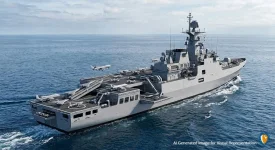
Current designs suggest each ship will weigh between 11,000 and 13,000 tonnes. This weight effectively places them in the international cruiser category, making them the largest surface combatants ever built in India and allowing them to carry more advanced systems than their predecessors.
The planned weaponry for these ships further underscores the grand scale of the project.
Each destroyer is expected to be equipped with approximately 144 Vertical Launch System (VLS) cells.
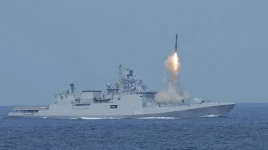
These launch tubes will house a mix of long-range surface-to-air missiles for air defence, such as the Kusha system, alongside powerful offensive weapons like the supersonic BrahMos Extended Range missiles and future long-range land-attack cruise missiles.
This vast arsenal will provide the ships with an unmatched ability to strike targets across land, sea, and air, significantly increasing their ammunition capacity compared to the destroyers currently in service.
The decision to build 10 or more of these advanced ships is directly linked to India’s growing maritime security needs across the Indian Ocean and the broader Indo-Pacific region.
Looking ahead to the 2040s, the Indian Navy plans to operate several aircraft carrier battle groups and independent maritime task forces at the same time across different global regions.
Moreover, these ships are being designed to act as command hubs for uncrewed systems, including drones and autonomous underwater vehicles.
A small fleet of three or four modern destroyers would simply not be enough to meet these demands once routine maintenance and crew rotations are considered.
To maintain a strong and continuous presence against growing regional naval powers, the Navy has determined that a much larger fleet of advanced warships is necessary.
To manage the financial and technological challenges, the Ministry of Defence is planning a phased approach for Project 18, rather than approving the entire 12-ship order at once.
The initial phase is expected to include four to five destroyers and is currently awaiting Acceptance of Necessity approval from the Defence Acquisition Council.
This first block of ships is estimated to cost between ₹70,000 crore and ₹80,000 crore, marking it as one of India's most expensive domestic naval projects.
This first phase will focus on proving the new hull design and perfecting the Integrated Electric Propulsion (IEP) system, ensuring all basic combat technologies work seamlessly together.
The shift to Integrated Electric Propulsion is one of the most critical technological upgrades in the programme.
Unlike traditional systems that use mechanical links to turn the propellers, an IEP system generates centralized electricity to power the ship.
This setup can simultaneously run the engines, advanced sensors, and demanding electronic warfare equipment.
Using an IEP system also prepares the destroyers for the future, ensuring they have the electrical power needed to support directed-energy weapons (like lasers) and other advanced technologies that will emerge in the coming decades.
Once the first few ships are successfully tested and operational, the Navy plans to begin a second phase to build six to seven more destroyers. These later ships will use the same proven hull but will be fitted with even more advanced weapons and sensors.
This strategy allows shipbuilders to maintain steady production lines while gradually adding new technologies—such as hypersonic BrahMos-II missiles, directed-energy weapons, and upgraded radar systems—without having to completely redesign the ship.
By building the ships in phases, the Navy is applying lessons from past projects, where making small design changes between tiny batches of ships caused logistical headaches and slowed down the manufacturing process.
Project 18 is structured around a stable core design that can easily adapt to new technologies over several decades of production.
The impact on India's defence industry will be equally profound.
Designing a brand-new 13,000-tonne stealth warship with electric propulsion and next-generation radar systems requires a massive initial investment in research, testing, and indigenous parts development.
By spreading these high development costs across 10 to 12 ships instead of just three, the overall cost per ship drops significantly over the life of the programme.
Furthermore, a long-term production run provides steady work for Indian shipbuilders. This stability allows them to improve their construction techniques, train specialized workers, and build a reliable supply chain.
This continuous pipeline of orders is vital, as India’s naval shipbuilding industry has often struggled with inconsistent contracts in the past, which disrupted production and slowed technological progress.