A rarely debated yet deeply revolutionary shift is on the horizon for Indian naval aviation: the potential transition towards drone carrier warfare. This concept relies on unmanned technologies, self-reliant strike networks, and a widely dispersed maritime air force.
Even though the nation has not formally declared a specific project for a drone carrier, several signs point to the Navy gearing up for an era where pilotless systems form the core of sea-based combat.
Embracing this shift would align India with modern naval strategies currently being tested by nations like the United States, China, Turkey, and the United Kingdom.
Conventional aircraft carriers are still some of the most formidable weapons globally, yet their vulnerabilities are growing.
These massive ships demand enormous financial investments, require huge crews, and are highly susceptible to advanced threats like long-range anti-ship missiles, hypersonic strike capabilities, and satellite-guided tracking.
Furthermore, building a replacement for a sunken supercarrier during an active conflict is an industrial and economic impossibility.
Consequently, contemporary naval tactics are moving away from concentrated targets, favouring widespread strike options, long-distance engagements, automated scouting, and deeply interconnected maritime missions.
Ships dedicated to carrying drones perfectly match this new strategy, as they provide continuous observation, flexible attack power, reduced danger to human lives, and a seamlessly linked naval fleet.
This tactical pivot is especially critical in the Indo-Pacific, a region witnessing the rapid growth of China's strategies designed to restrict the movement of foreign militaries.
The oceans of tomorrow will likely not be dominated by a handful of giant warships. Rather, modern navies are pursuing widespread arrays of sensors, automated targeting mechanisms, and coordinated drone strike groups that can cover immense stretches of water.
The Indian Navy is showing a keen interest in these advanced ideas, evidenced by its growing funding for interconnected warfare systems, maritime intelligence gathering, and automated monitoring equipment.
Reflecting this broader push, India is currently advancing a massive $2 billion military drone procurement plan—its largest ever—to rapidly acquire domestic unmanned systems for both border and maritime surveillance.
Operating within the Indian Ocean presents massive hurdles for the country.
The constant presence of Chinese warships, regular patrols by their submarines, increasing surveillance activities, and the broader strategic rivalry in the Indo-Pacific demand unbroken monitoring over thousands of miles.
Using only piloted planes to maintain non-stop watch over such an enormous area is financially unviable.
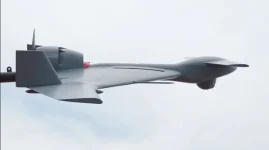
Unmanned aerial vehicles (UAVs) capable of long flights solve this problem by delivering continuous intelligence, slashing operating expenses, allowing for flexible scaling, and keeping personnel out of harm's way.
These machines can tirelessly watch over vital shipping routes, narrow straits, and enemy fleet activities, all while instantly sharing targeting details with the broader naval network.
A potential blueprint for the future features specialised drone motherships, built entirely to launch, recover, and command swarms of pilotless aircraft.
These unique ships could release a wide variety of robotic systems, ranging from scouting drones and invisible strike aircraft to explosive kamikaze units, radar-jamming tools, and submarine-hunting UAVs.
Ultimately, this approach would establish a sprawling, pilot-free aviation wing operating directly over the ocean.
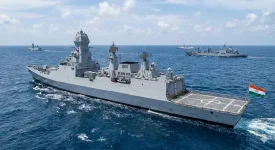
A more practical step for the immediate future could be the adaptation of current amphibious assault vessels, landing platform docks (LPDs), or support ships to handle vertical take-off drones and maritime surveillance UAVs.
Many maritime forces around the world are already retrofitting their existing fleets to support these unmanned missions.
Notably, the Indian Navy is moving forward with an estimated ₹8,000 crore project to build four indigenous LPDs that are expected to act as floating command centres capable of supporting fixed-wing drones and vertical take-off operations.
In the coming years, India's own aircraft carriers might also embrace these automated technologies.
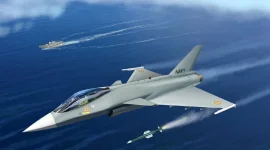
Ships like the INS Vikrant or the proposed IAC-2 could carry loyal wingman drones, self-guided spy aircraft, and unmanned attack platforms, operating them right next to piloted jets like the upcoming Twin Engine Deck Based Fighter (TEDBF).
Reinforcing this vision, India is actively developing the AI-enabled 'Abhimanyu' drone, a stealthy loyal wingman designed specifically for carrier operations alongside the MiG-29K and Rafale-M by 2026.
The primary driver behind this entire strategic shift is the looming presence of China.
Beijing is rapidly developing its own drone systems for aircraft carriers, self-operating ocean monitors, pilotless spy planes, and fully integrated targeting grids.
The Chinese Navy is consistently weaving automated intelligence-gathering tools and drone communication links into the core of its maritime forces.
New Delhi seemingly understands that the next era of naval combat in the Indo-Pacific will rely heavily on lightning-fast automated scouting, widely shared targeting data, and robotic battlefield management, shifting away from classic ship-to-ship battles.
The escalating danger of anti-ship missiles aimed at standard aircraft carriers is another crucial reason to explore drone-centric vessels.
Today's ultra-fast hypersonic weapons, long-distance ballistic missiles, and coordinated swarm attacks have made densely packed naval fleets highly fragile.
Spreading forces across drone motherships improves a fleet's chances of survival and reduces the overall strategic hazard, as the destruction of a smaller drone-launching ship is far less devastating than the loss of a massive supercarrier.
Drones capable of staying airborne for extended periods will be particularly vital for keeping watch over the Arabian Sea, the Bay of Bengal, the entry points to the Malacca Strait, and the deep waters of the Southern Indian Ocean.
These flying machines can relentlessly follow hostile ships, detect submarines, supply real-time targeting coordinates, and aid in anti-submarine missions without interruption.
Over time, India is expected to develop a diverse arsenal of naval drones, which could feature sea-skimming attack UAVs, explosive anti-ship kamikaze units, swarms of scout drones, automated submarine hunters, and electronic warfare aircraft designed to confuse radars and act as decoys.
A number of current Indian defence projects hint that this future is already taking shape.
The military has consistently shown enthusiasm for drones that launch from ship decks, independent naval aircraft, and robotic combat vehicles.
The upcoming TEDBF fighter jets are slated to fly alongside unmanned wingmen and automated spy planes, while the expanding swarm technologies from the Defence Research and Development Organisation (DRDO) point to a heavier reliance on unmanned naval missions.
The recent introduction of the 'Matangi' unmanned surface vessels (USVs) and exploratory projects like REARM-D—which seeks to use heavy-lift drones to reload ship missile cells at sea—further underscore this commitment to naval autonomy.
Adopting the drone mothership model also makes perfect sense for India's strategic goals and financial constraints.
Rather than placing all its bets on astronomically priced supercarriers, the Navy could utilise smaller, drone-focused ships to maintain a constant presence at sea, slash purchasing expenses, and enjoy much greater flexibility when deploying forces across the Indian Ocean.
In theory, a naval strike group of tomorrow might feature a single standard aircraft carrier flanked by several drone motherships commanding scout UAVs, explosive drones, electronic jamming systems, and pilotless submarines.
These robotic assets would fly far ahead of the main fleet to spot dangers, push sensor boundaries hundreds of kilometres outward, and overwhelm the adversary's defences long before human pilots ever cross into the danger zone.