Group Captain Animesh Patni, a distinguished Indian Air Force officer and former MiG-29 fighter pilot, has been honoured with the Vir Chakra.
He received India’s third-highest wartime gallantry award for his extraordinary leadership and tactical brilliance as the Commanding Officer of an S-400 air defence squadron during the pivotal Operation Sindoor in May 2025.
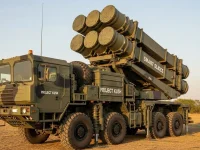
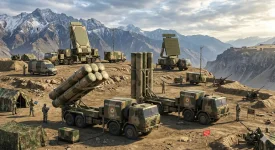
According to reliable sources, Group Captain Patni commanded two firing units of the advanced S-400 Triumf long-range air defence system. Throughout the intense air campaign, he employed a highly dynamic and unpredictable deployment strategy.
By constantly shifting the locations of the missile batteries, he effectively confused enemy targeting systems.
This tactical mobility not only ensured the continuous operational readiness of the units but also significantly boosted the overall survivability of India's integrated air defence network against potential counter-strikes.
Under his direct command, the S-400 units successfully tracked and destroyed multiple enemy fighter aircraft.
The most remarkable achievement of his tenure was the unprecedented interception of a Pakistan Air Force Saab 2000 Erieye Airborne Early Warning and Control (AEW&C) aircraft.
Utilizing the system's formidable 40N6 missile variant, the S-400 regiment eliminated the high-value target at an astonishing range of 314 kilometres.
Military analysts widely recognize this historic strike as the longest confirmed surface-to-air missile kill in modern aviation warfare.
The destruction of such a crucial airborne platform carried massive strategic consequences.
AEW&C aircraft act as essential force multipliers, responsible for extending radar visibility, providing early warning, and managing combat operations over vast distances.
By eliminating this critical asset, the Indian Air Force effectively blinded a significant portion of Pakistan's radar coverage, severely degrading their situational awareness and crippling their ability to coordinate complex aerial engagements.
In addition to his tactical triumphs on the battlefield, Group Captain Patni displayed remarkable situational awareness regarding base security.
Sources confirm that his sharp vigilance and rapid response led to the identification and capture of a suspected Pakistani Inter-Services Intelligence (ISI) operative lurking near the highly sensitive Adampur Airbase during the conflict.
This swift action prevented a major security breach at a highly critical stage of the active campaign.
Executing military air defence operations demands a delicate balance between launching offensive strikes and protecting one's own assets.
The strategy of frequently relocating long-range surface-to-air missile batteries is a proven method to avoid detection by enemy intelligence, surveillance, and reconnaissance (ISR) platforms.
By maintaining mobility and avoiding predictable patterns, commanders like Group Captain Patni successfully enhance the survivability of vital strategic systems while maintaining relentless pressure on hostile airspace.