According to Russian journalist and political commentator Vasily Golovnin, the global arms trade is undergoing a major transformation.
India, historically recognised as one of the world's largest buyers of Soviet and Russian military hardware, is swiftly emerging as a formidable arms supplier.
The nation is now aggressively pushing into territories and building partnerships in regions that were once considered exclusive strongholds for Moscow.
Highlighting recent data, Golovnin noted that India’s defence overseas sales hit approximately $4.08 billion (over ₹38,400 crore) for the recent financial year.
While this overall volume is still growing relative to the absolute giants of the industry, it reflects a massive jump of nearly 63% from the prior fiscal period.
The broader historical picture is even more striking: over the 12-year tenure of Prime Minister Narendra Modi, the volume of military exports has multiplied by a staggering 56 times.
Open-source government data aligns with this trajectory, showing that India has now officially entered the ranks of the top 25 arms exporters in the world, propelled by a 151% growth in exports from public sector undertakings alongside robust manufacturing from private domestic firms.
Since 2020, New Delhi has successfully opened doors to previously unexplored defence markets.
The Philippines now stands as the largest importer of Indian military technology, taking up 42% of the export share, largely driven by landmark $375 million deals for the BrahMos supersonic cruise missiles.
Armenia is close behind at 32%, while Vietnam holds the third spot at 11%. Strikingly, India had no military export footprint in these three nations just half a decade ago.
This rapid expansion demonstrates India's ability to navigate changing geopolitical currents and secure major contracts, with countries like Vietnam and Indonesia now actively negotiating for further BrahMos systems and naval crafts.
The strategic shift by Armenia is highly notable within these new partnerships.
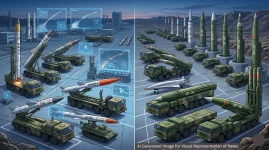
Historically dependent on Russia for the vast majority of its military hardware, Yerevan has actively sought Indian weaponry—such as the Pinaka multi-barrel rocket launchers and Akash surface-to-air missile systems—following its recent security challenges with Azerbaijan.
With Russia currently focusing its military production and resources on the ongoing war in Ukraine, Armenia's pivot to reliable, high-tech Indian alternatives highlights a fundamental restructuring of the post-Soviet military trade and the redefining of traditional supply chains.
Ultimately, the assessment by Golovnin underscores the rapid evolution and growing maturity of India's indigenous defence manufacturing base.
Through self-reliance initiatives and targeted diplomatic efforts, the nation is steadily cutting its own dependence on foreign imports while rising as a dependable global supplier.
With Indian defence equipment, ranging from artillery to electronics, now reaching over 80 countries worldwide, international observers are closely monitoring how this newfound export power will challenge the long-standing market dominance of established giants like Russia across Asia and beyond.