Despite the rapid global rise of autonomous weapons and drone-centric warfare, manned fighter jets will continue to form the backbone of aerial combat for the next two decades.
This pragmatic outlook was shared by DRDO Chairman Dr. Samir V. Kamat, who emphasized that while unmanned systems are accelerating, a complete transition to fully autonomous high-intensity air combat remains a distant objective.
The fundamental reason for this delay is the irreplaceable need for a "human-in-the-loop" during complex military operations.
Although artificial intelligence (AI) has made tremendous strides, modern dogfights and airstrikes unfold in highly unpredictable environments.
Pilots are frequently forced to make split-second decisions amid disrupted communications, intense electronic warfare, and unclear target identities.
When deciding whether to engage high-value targets—especially in areas close to civilian populations—human judgment, ethical accountability, and on-the-fly adaptability remain critical capabilities that today's AI cannot reliably mirror.
This reliance on human pilots is further amplified by the realities of electronic warfare.
In modern combat zones where GPS signals are routinely blocked and communication networks are jammed, unmanned aerial vehicles (UAVs) run a high risk of mission failure or losing their control links.
A trained pilot in the cockpit, however, maintains direct situational awareness and can ensure the mission continues smoothly, offering a level of resilience that current drone technology struggles to achieve.
Instead of outright replacing pilots, India's military strategy is pivoting toward Manned-Unmanned Teaming (MUMT).
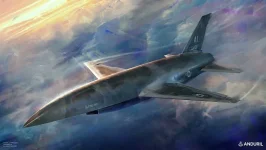
Under this doctrine, upcoming autonomous platforms like DRDO’s Ghatak Unmanned Combat Aerial Vehicle (UCAV) and Loyal Wingman drones will fly alongside and support human-piloted jets. Future frontline fighters will act as command nodes in the sky.
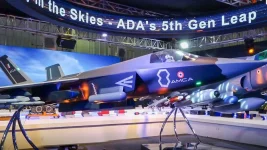
Recent updates to India's aerospace timeline confirm this trajectory: the LCA Tejas Mk2—which Dr. Kamat recently noted is gearing up for its highly anticipated first flight between June and July 2026—and the Advanced Medium Combat Aircraft (AMCA)—currently in its crucial 24-month detail design phase ahead of a targeted 2028 prototype rollout—will serve as these "quarterback" platforms.
They will orchestrate networks of stealthy drones to execute dangerous missions, such as deep strikes and taking out enemy air defence systems, thereby keeping human pilots out of the deadliest zones while maintaining absolute operational control.
India’s robust procurement and development pipeline guarantees that manned jets will fly well into the mid-21st century.
Alongside the Tejas Mk2 and the fifth-generation AMCA, the anticipated acquisition of 114 Multi-Role Fighter Aircraft (MRFA) secures a massive manned fleet for decades to come.
Simultaneously, specific technological roadblocks prevent a faster shift to unmanned combat.
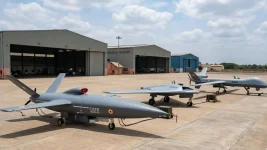
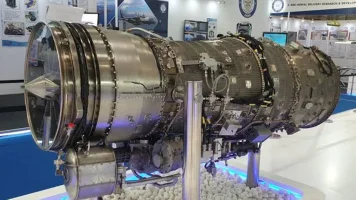
While India has successfully mass-produced smaller surveillance and tactical drones, major hurdles remain in developing high-thrust engines for supersonic UCAVs, establishing secure high-bandwidth satellite communications, and creating global safety certifications for autonomous weapons.
These are complex engineering, regulatory, and tactical challenges that will require years to resolve.
Ultimately, Dr. Kamat's roadmap envisions a carefully phased evolution of India's air defence.
Up until 2030, traditional manned fighters will dominate air superiority and strike roles. Moving into the 2030–2040 timeframe, these jets will transition into command hubs managing advanced drone swarms under the MUMT framework.
It is only beyond 2045, once AI, autonomous flight, and next-generation propulsion are fully mature, that unmanned systems are expected to take over frontline combat, eventually shifting manned aircraft into specialized or secondary support roles.