- Views: 41
- Replies: 2
The much-anticipated BrahMos-II hypersonic cruise missile project, long viewed as the pinnacle of Indo-Russian military collaboration, is facing substantial roadblocks.
Driven by skyrocketing prices for its scramjet engines, a lack of comprehensive technology transfer, and exorbitant per-unit costs, the joint venture is no longer seen as a viable option for widespread use against conventional targets like enemy aircraft shelters or command centres.
Consequently, India's strategic focus is swiftly pivoting towards domestic hypersonic missile development, prioritising affordability and practical combat utility over expensive joint platforms.
Initially designed as the Mach 7–8 successor to the formidable BrahMos supersonic missile, BrahMos-II was meant to deliver a 1,500 km range capable of piercing modern air defence shields.
However, the timeline for its maiden flight has now been pushed back to 2027–28.
This delay is largely attributed to Moscow's hesitance to share critical scramjet propulsion technology, which has reportedly driven the estimated cost of a single BrahMos-II missile to an unviable $12.5 million—more than double the price of existing supersonic BrahMos variants.
In a scenario involving intense, sustained warfare, deploying such costly munitions against standard hardened shelters or scattered communication nodes is economically unfeasible.
While the BrahMos-II remains highly relevant for isolated, high-value strategic strikes, its prohibitive price tag severely restricts the sheer volume of missiles India could stockpile and fire.
A limited inventory is a critical vulnerability when engaging with well-equipped adversaries possessing multi-layered missile defence networks.
Practical lessons from recent military engagements, notably the cross-border skirmishes of May 2025 during Operation Sindoor, brought these operational realities to light.
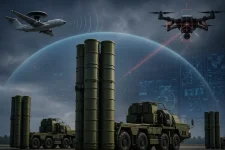
During the conflict, the Pakistan Air Force’s Chinese-made HQ-9 surface-to-air missile batteries failed to reliably intercept proven Indian munitions, such as Rampage rockets and SCALP-EG cruise missiles.
By utilising low-altitude flight paths, electronic warfare tactics, and stealth profiles, these relatively affordable weapons easily breached the HQ-9 radar screens, exposing severe vulnerabilities in Pakistan's integrated air defence architecture.
Such combat performance clearly illustrates that even highly advanced surface-to-air missile shields struggle to track and destroy fast-moving, low-profile threats.
Therefore, deploying a hypersonic cruise missile that blends breakneck speeds with mass-producible, affordable manufacturing would take advantage of these enemy blind spots much more efficiently than relying on a handful of excessively priced, specialised missiles.
Acknowledging these strategic imperatives, the Defence Research and Development Organisation (DRDO) is rapidly advancing several entirely homegrown hypersonic initiatives, most notably under Project Vishnu.
Programmes like the Extended Trajectory-Long Duration Hypersonic Cruise Missile (ET-LDHCM) are at the forefront of this shift.
These indigenous efforts heavily rely on autonomous scramjet advancements—building upon the success of India's earlier Hypersonic Technology Demonstrator Vehicle (HSTDV) test flights—and feature active cooling mechanisms and modular designs meant to maximise destructive capability while keeping manufacturing costs low.
The primary objective of these domestic projects is to dramatically reduce the cost per unit by maximising indigenous components and enabling large-scale assembly.
They aim to deliver the following strategic advantages:
- Cost-Effective Scalability: Lower unit costs through high indigenous manufacturing content.
- Precision Targeting: Optimised warheads and guidance systems tailored for both hardened infrastructure and mobile targets.
- Massed Strike Capability: A greater inventory depth that allows forces to overwhelm enemy defences through sheer numbers.
By embracing indigenous production, New Delhi is actively mitigating the risks of foreign reliance while keeping defence budgets in check.
The nature of modern warfare dictates that the victor is often the force capable of sustaining relentless, high-tempo strikes over an extended period.
Developing a family of cost-effective, indigenous hypersonic missiles—suitable for routine bombardment of airbases, supply lines, and enemy leadership nodes—will fundamentally upgrade the Indian Armed Forces' deep-strike capabilities.
These new weapons will seamlessly integrate alongside the existing arsenal of supersonic BrahMos missiles and precision-guided bombs, forming a robust, multi-layered offensive net that deters adversaries economically.
As DRDO engineers continue to conquer complex technical hurdles related to scramjet engine endurance and extreme thermal management, the defence sector anticipates rapid prototyping and swift induction of these missiles in the near future.
The strategic pivot away from prohibitively expensive foreign partnerships towards self-reliant, homegrown technologies represents a significant maturation of India’s military doctrine.
It is a calculated move that perfectly harmonises world-class lethality with the practical, economic demands of protracted warfare.