- Views: 1K
- Replies: 2
In a landmark decision that redefines India’s aerospace landscape, state-owned giant Hindustan Aeronautics Limited (HAL) has been excluded from the race to manufacture the country’s first fifth-generation stealth fighter, the Advanced Medium Combat Aircraft (AMCA).
The shortlist for this prestigious project is now restricted to three major private sector conglomerates: Tata Advanced Systems Limited, Larsen & Toubro, and Bharat Forge.
This exclusion marks a significant departure from historical precedent. For decades, HAL has served as the sole custodian of India’s fighter aircraft production, delivering everything from the licence-produced MiG series to the indigenous Tejas.
However, policymakers in New Delhi have signalled a decisive intent to break this monopoly. By steering the AMCA programme towards private enterprise, the government aims to accelerate development timelines and cultivate a broader industrial base for defence manufacturing.
Sources indicate that a final development partner could be selected within the next three months, maintaining the ambitious target of rolling out the first prototype by 2027–2028.
The "Capacity Clause" That Disqualified HAL
While the shift towards privatisation is a strategic policy choice, HAL’s exit was technically triggered by a specific condition in the Request for Information (RFI).Sources familiar with the selection process reveal that the tender included a clause penalising companies with an excessively high ratio of outstanding orders to current turnover.
Reportedly, the criteria effectively disqualified firms whose order books exceeded three times their annual revenue. This clause proved fatal for HAL’s bid.
ith a confirmed order book swelling to approximately ₹1.84 lakh crore (as of late 2025) against an annual turnover of roughly ₹30,000 crore, HAL’s backlog ratio sits at nearly eight times its revenue—far beyond the permissible limit.
While this clause appears technical on the surface, it serves a clear practical purpose: to prevent an already overburdened manufacturer from taking on a complex new project that requires undivided attention.
A Pipeline Stretched to the Limit
A closer look at HAL’s current commitments justifies the concerns regarding its capacity.The company is currently tasked with an unprecedented workload that stretches well into the 2030s:
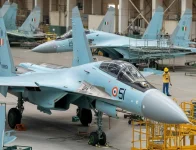
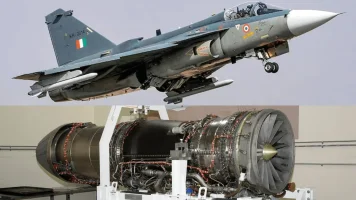
- Fighter Jets: HAL is executing a contract for 83 Tejas Mk1A fighters, with a follow-on order for 97 more in the pipeline. Additionally, it has secured orders for 12 new Su-30MKI aircraft and is preparing for the future production of the Tejas MkII, which will involve at least 120 airframes.
- Helicopters: The company has signed a massive contract for 156 ‘Prachand’ Light Combat Helicopters (LCH) and continues to produce the Advanced Light Helicopter (ALH) Dhruv.
- Trainers: The production line is also busy with the HTT-40 basic trainer, where orders are expected to increase from the current 70 to over 100 aircraft.
- Upgrades: Perhaps the most significant long-term commitment is the "Super-30" upgrade programme for the Indian Air Force’s fleet of roughly 260 Su-30MKI fighters, a multi-billion dollar effort spanning decades.
A Historic Opportunity for the Private Sector
With the government allocating ₹15,000 crore specifically for the AMCA prototype phase (cleared by the Cabinet Committee on Security in March 2024), the stakes for the private sector are incredibly high.Each of the shortlisted contenders brings distinct strengths to the table.
Tata Advanced Systems has already proven its mettle through the C-295 transport aircraft facility in Vadodara.
Larsen & Toubro possesses deep expertise in complex systems integration, including nuclear submarine hulls, while Bharat Forge is a global leader in metallurgy and advanced artillery systems.
The winner will serve as the primary industry partner to the Aeronautical Development Agency (ADA), tasked with building India’s first stealth fighter from the ground up.
Conclusion: A Dual-Track Future
HAL’s exclusion from the AMCA manufacturing lead does not signal its decline.On the contrary, with an order book approaching historic highs, HAL remains the undisputed backbone of India’s combat aviation.
However, this decision clarifies the government’s vision for the future: a dual-track ecosystem where HAL focuses on mass production and sustaining existing fleets, while private industry is entrusted with spearheading next-generation platforms.