Following Prime Minister Narendra Modi’s official announcement of the "Sudarshan Chakra" programme, Israel has become the first international partner to formally propose technical collaboration.
The ambitious initiative aims to establish a sophisticated, AI-driven, multi-layered air defence network across India, with a target for full operational readiness by 2035.
A Sovereign National Shield
The Sudarshan Chakra is not merely a project to purchase new hardware; it is designed as a comprehensive, independent architecture for air and missile defence.The framework will unify India’s current Ballistic Missile Defence (BMD) capabilities with future assets, such as the long-range interceptors currently being developed under Project Kusha.
By 2026, India is expected to begin trials for the M1 interceptor, a key pillar of this system capable of engaging threats at a range of 150 km.
Subsequent versions, the M2 and M3, are planned to extend this reach to 400 km, providing a home-grown alternative to the Russian S-400 system.
The "Capital Dome" and Layered Security
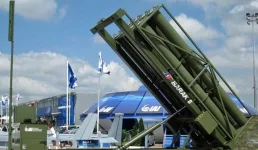
For the protection of high-priority locations like the National Capital Region, the programme envisions a "Capital Dome" structure. This lower-tier layer will utilise:- Quick Reaction Surface-to-Air Missiles (QRSAM) and VL-SRSAM for rapid response.
- Directed Energy Weapons (DEW), including high-energy lasers, to neutralise low-cost threats like drone swarms and loitering munitions.
- Integrated Command Centres to ensure a seamless protective envelope against everything from tactical rockets to hypersonic missiles.
Israel’s Strategic Pitch: The Digital Nervous System
While India intends to manufacture the physical hardware—including radars and missiles—domestically, Israel’s proposal focuses on the "digital brain" of the grid.Jerusalem has offered expertise in:
- Battle-Management Algorithms: Systems that can decide in milliseconds which weapon to fire, ensuring that expensive missiles are saved for high-end threats while lasers or cheaper interceptors handle smaller drones.
- Sensor Fusion Logic: Technology that allows various independent radars and sensors to communicate as one unified network, eliminating data lag.
- Target Discrimination: Advanced seeker technology to help the system distinguish between actual warheads and decoys or debris, a critical requirement for high-altitude interceptions.
Enhanced Early Warning
Open-source data and reports from the recent bilateral discussions during the Prime Minister's visit to Israel suggest that the partnership could involve "horizon scanning" technologies.These would extend India’s radar and sensor detection capabilities up to 2,500 kilometres beyond its borders.
Such early detection provides the military with vital extra minutes to engage incoming threats at maximum range, significantly increasing the success rate of the multi-layered defence.
Strengthening Self-Reliance
Strategic experts note that this collaboration aligns with India’s "Aatmanirbhar Bharat" goals.By developing the core hardware at home while integrating proven Israeli software and logic, India can accelerate its development timelines.
This "shield and sword" approach ensures that the country remains protected against evolving 21st-century threats while maintaining sovereignty over its primary defence infrastructure.