The Indian Air Force (IAF) and the Japan Air Self-Defense Force (JASDF) are set to commence the bilateral air combat exercise ‘Veer Guardian 2026’ at Air Force Station Jodhpur in Rajasthan, scheduled from September 9 to September 21.
The exercise marks a historic milestone in bilateral military ties, featuring the first-ever operational deployment of Japanese fighter aircraft to Indian soil.
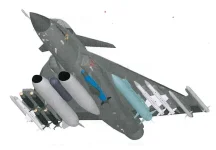
Japan is deploying its frontline Mitsubishi F-2A multirole fighters—an advanced indigenous platform developed from the Lockheed Martin F-16 architecture—along with approximately 110 JASDF personnel.
While the drills officially focus on tactical air combat maneuvers and bilateral interoperability, strategic attention has centered on Tokyo’s keen interest in India’s operational electronic warfare (EW) data and technical insights gathered from countering Chinese-origin air-to-air missile systems.
Historic Deployment and Long-Range Trans-Continental Logistics
The transit of the F-2A fighters from Tsuiki Air Base in Fukuoka Prefecture to Jodhpur spans over 5,600 kilometres.Because the single-engine multirole fighters cannot cover this distance without intermediate support, the United States Air Force (USAF) is providing mid-air refuelling support along the transit corridor through Southeast Asia.
This deployment serves as a direct reciprocal visit to the inaugural Exercise Veer Guardian conducted in January 2023 at Hyakuri Air Base in Japan, where the IAF deployed four Su-30MKI fighters, two C-17 Globemaster III transport aircraft, and an IL-78 aerial refuelling tanker.
The arrival of Japan's frontline combat aircraft in India underscores the rapidly maturing security architecture between the two Quad partners.
Beyond Basic Drills: The PL-15E Electronic Warfare Dimension
Beyond routine dissimilar air combat training, the bilateral interaction provides a critical forum for sharing technical insights on modern Chinese aerial weaponry.During the high-intensity air engagements of Operation Sindoor last year, Pakistani combat aircraft—including Chinese-supplied J-10CEs—launched export-variant PL-15E Beyond-Visual-Range Air-to-Air Missiles (BVRAAM) against IAF formations.
During those engagements, the advanced Electronic Countermeasure (ECM) suites deployed by the IAF—including the integrated SPECTRA EW system on Dassault Rafale fighters and dedicated electronic jamming pods mounted on Su-30MKIs—severely degraded the guidance systems of incoming missiles.
By disrupting the terminal Active Electronically Scanned Array (AESA) radar seekers and mid-course datalinks, the jamming caused several missiles to break lock and fall largely intact in Indian territory, including recoveries made in Punjab's Hoshiarpur district.
DRDO's Technical Evaluation of Chinese Radar Seekers
Retrieved missile wreckage and intact sub-assemblies were transferred to laboratories under the Defence Research and Development Organisation (DRDO) for comprehensive technical exploitation.Indian defence scientists have conducted in-depth studies on:
- AESA Seeker Architecture: Analysis of the gallium nitride/arsenide transmit-receive modules, operational frequencies, and scan patterns used by modern Chinese missile seekers.
- Guidance and Tracking Algorithms: The software protocols governing how the missile transitions from inertial/datalink mid-course guidance to autonomous terminal tracking.
- Vulnerability Mapping: Identification of specific waveforms, frequency modulations, and jamming techniques capable of spoofing the missile’s electronic counter-countermeasure (ECCM) logic.
Strategic Convergence in the Indo-Pacific
Tokyo's interest in India's EW evaluations stems from its own security posture in East Asia.The JASDF routinely encounters People’s Liberation Army Air Force (PLAAF) fighters equipped with modern AESA radars and advanced BVR missiles around the East China Sea and the southwestern Ryukyu island chain.
Access to verified, combat-derived electronic signatures and countermeasure data offers Japan real-world operational validation that cannot be replicated in simulation.
With Japanese radar and EW specialists among the international technical observers seeking access to these findings, Veer Guardian 2026 reflects an increasingly integrated intelligence- and technology-sharing framework between New Delhi and Tokyo amid shared regional security challenges.