- Views: 5K
- Replies: 32
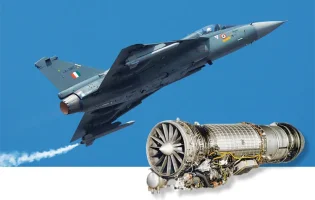
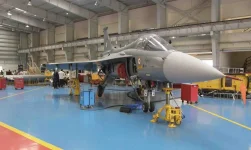
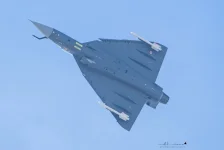
The anticipated arrival of the Tejas Mk1A fighter jets for the Indian Air Force appears to be facing yet another setback, with emerging reports suggesting that the revised delivery target for March may effectively be missed.
Defence journalist Snehesh Alex Phillips, reporting for The Print, has indicated that the programme is grappling with continued delays, making a March handover highly improbable.
This potential slippage adds to a growing list of missed timelines that have plagued the induction of the indigenous fighter, which was originally slated to bolster the Air Force's combat capabilities much earlier.
Initial commitments from Hindustan Aeronautics Limited (HAL) regarding the delivery schedule have seen significant downward revisions.
The manufacturer had originally promised to deliver 10 aircraft in the first phase, a figure that was subsequently reduced to five. Current assessments suggest that even this lowered quantity is now uncertain.
Although there has been no independent verification of these specific claims, the lack of any visible induction ceremony or a comprehensive status update from HAL has only deepened concerns regarding the programme's adherence to its schedule.
Officially, HAL has not declared a new delay, yet the trajectory of the programme over the last year reveals a pattern of unfulfilled promises.
The first Tejas Mk1A was originally expected to be delivered in October, but that deadline passed without result. A subsequent assurance that the aircraft would be inducted by the end of 2025 also failed to materialise.
Internal projections now suggest that March 2026 is viewed as the earliest possible window for induction, representing a lag of several months compared to the timelines previously shared with the public.
A primary technical hurdle contributing to this bottleneck is the complex process of weapons integration and certification.
While reports indicate that air-to-air weapons integration was successfully concluded in the final month of the previous year, the critical air-to-ground weapons trials remain unfinished.
These trials are a mandatory requirement for achieving Full Operational Clearance (FOC) for the Mk1A configuration. Until these specific capabilities are validated, the aircraft cannot be formally handed over to the Indian Air Force for combat duties.
These persistent delays underscore the intricate nature of upgrading the legacy Tejas platform to the advanced Mk1A standard.
This variant features significant enhancements, including an Active Electronically Scanned Array (AESA) radar, a modern electronic warfare (EW) suite, and compatibility with a broader array of weaponry.
Integrating these sophisticated systems requires rigorous flight testing; consequently, any technical snag encountered during this phase inevitably compresses the timeline, leaving little margin for error.
For the Indian Air Force, these delays are not merely administrative but carry serious operational implications.
The Tejas Mk1A is strategically critical for replacing the ageing fleet of MiG-21 interceptors and arresting the decline in squadron numbers, which are currently below authorised levels.
Every month of delay forces the Air Force to extend the service life of older platforms, thereby increasing the operational burden on frontline squadrons that are already stretched thin by high security demands.
Despite HAL's public maintenance that deliveries are proceeding according to plan, the sequence of missed milestones has created a noticeable credibility gap.
Open-source data indicates that the programme has also faced headwinds from supply chain issues, specifically regarding the delivery of GE F404 engines, which power the jets.
Unless the remaining weapon trials are expedited and concluded without further technical glitches, the March target is likely to become another historical footnote of a deadline that passed without the induction of India’s flagship light fighter.
Currently, the Tejas Mk1A programme remains robust in terms of its long-term technological promise, but confidence in its short-term delivery schedule continues to wane.
The upcoming weeks are poised to be decisive in establishing whether the Indian Air Force will finally receive the upgraded fighter in March or if it must endure a longer wait for the aircraft destined to form the backbone of its future defensive capabilities.