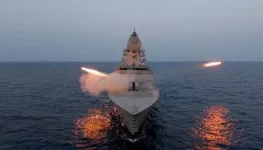
Chief of the Naval Staff Admiral Krishna Swaminathan on Saturday asserted that the force is "self-reliant and adaptive" while mentioning that most of the modern technologies required by the Navy is today 'Made in India'.
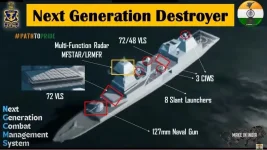
During an exclusive interaction with IANS after the commissioning ceremony of INS Mahendragiri into the Indian Navy in Andhra Pradesh's Visakhapatnam, Swaminathan said: "The Indian Navy today has received a very potent and highly significant value addition to its fleet. The Indian shipbuilding industry, including both domestic and private sectors, has grown in a mature and integrated manner over the past few years."
He added that INS Mahendragiri has been built in 50 per cent less than the stipulated time taken to build the vessel, for the commissioning ceremony.
While maintaining that Indian Navy is an 'Aatmanirbhar' (self -reliant) force, the Naval Chief mentioned: "There has been a 75 per cent increase in the ship's indigenous constituents. Our efforts are always directed towards ensuring self-reliant programmes."
"We have made a very ambitious plan as part of our capability enhancement, to deal with our uncertain and unpredictable security environment. In that, one of the fundamental principles of our ship building is to be 'indigenous'. We want to source weapons, sensor systems and steel that are indigenous," Swaminathan stressed.
He also said that the Navy is attempting to include indigenous solutions to shipbuilding as much as possible.
Responding to questions on evolving warfare technologies, Naval Chief Swaminathan noted that the character of warfare and the nature of war are always changing based on the technologies available.
"However, as an adaptive armed force, the Indian Navy is cognisant of these changes. We track all trends, the technologies available with others, the emerging technologies, and the technologies that are likely to come in the future. We continuously monitor these developments," he said.
He added that the Navy's capability enhancement plans are based on the kind of technologies that are being used across the world.
"Accordingly, we (India) need to be adaptive so that we are able to stand up with our military power in case the country faces any conflict," he said.
"So, when we built hard power...hard capabilities, we keep a tab on the kind of technologies being used by other navies and our adversaries. Also, if we have to be a step ahead, then we have to adapt the required technologies," Swaminathan reiterated.
The Naval Chief emphasised: "I am extremely happy to say that all those kinds of technologies are being made in India today."
He mentioned that the Navy, along with the Ministry of Defence, Defence Research and Development Organisation (DRDO) and Department of Defence Production (DDP), interact with various private and public sector industries and "give them challenges".
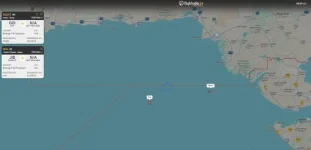
As far as the Strait of Hormuz is considered, the Naval Chief said: "It is not a new or big issue for the Indian Navy. "It is a part of our role, we are made for this."
Maintaining that the Strait is a war zone, Swaminathan said: "The merchant ships need to be protected and rescued from there, on the directions of the government."
"We are very happy that before it became a national crisis... when the nation wanted the Indian Navy to be present in the Strait of Hormuz to escort our merchant ships safely from there, we have been able to do it," he added.