- Views: 2K
- Replies: 4
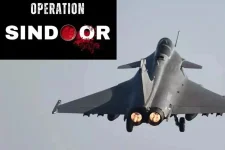
The successful deployment of air-launched cruise missiles during the "Operation Sindoor" has achieved significant strategic objectives, but it has also reignited an essential debate within India’s national defence circles.
While the destruction of high-value targets proved India's precision strike capabilities, experts are now questioning whether the Indian Air Force (IAF) requires dedicated heavy bombers to sustain high-intensity operations.
The Limitation of Multirole Fighters
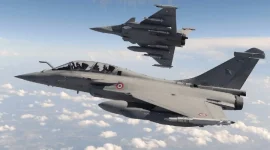
In the recent operations, the IAF relied heavily on its frontline multirole fighters, specifically the Sukhoi Su-30MKI and the Rafale, to deliver long-range strikes.While these aircraft are technologically advanced, the operation highlighted a physical bottleneck: payload capacity.
Multirole fighters are designed for versatility—engaging in air-to-air combat while also performing ground attacks.
However, when tasked with carrying massive strategic weapons, their efficiency drops.
Using a sophisticated fighter as a "missile truck" often means the aircraft can only carry a very limited number of weapons per flight, necessitating more sorties and increasing the risk to pilots and frames.
The "Single-Shot" Constraint
The BrahMos-A, India's premier supersonic cruise missile, weighs approximately 2.5 tonnes.Because of its massive size, a Su-30MKI must undergo significant structural modifications just to carry a single missile on its centerline station.
This effectively turns a primary air-superiority fighter into a "single-shot" platform for that mission.
The French-made Rafale faces similar constraints. When equipped with SCALP (Storm Shadow) cruise missiles, the aircraft usually carries only two units.
This limit is necessary to ensure the jet still has room for external fuel tanks, electronic warfare pods, and air-to-air missiles for self-defence.
In a full-scale conflict involving hundreds of dispersed targets, this low "strike density" could prevent the IAF from achieving rapid, overwhelming force.
Global Comparisons: The Case for Mass
Modern air doctrine in countries like the United States, Russia, and China relies on the concept of "massed precision fire."- United States: The B-1B Lancer can carry up to 24 JASSM (Joint Air-to-Surface Standoff Missiles) in its internal bays.
- China: The H-6K bomber can launch six CJ-10 land-attack cruise missiles simultaneously.
- Russia: The Tu-160 and Tu-95 provide the ability to launch waves of cruise missiles from thousands of kilometers away.
Shifting Strategic Requirements
Historically, India’s military planning focused on tactical strikes along its immediate borders, where the shorter range of fighter jets was sufficient.However, the modern battlefield is changing. The emergence of sophisticated "Anti-Access/Area Denial" (A2/AD) bubbles and the need to project power across the vast Indian Ocean Region (IOR) have shifted the requirements.
A heavy bomber or an "arsenal aircraft" would act as a force multiplier.
Rather than performing traditional "carpet bombing," a modern Indian bomber would serve as a high-capacity launch platform for:
- Long-range cruise missiles (BrahMos, Nirbhay)
- Hypersonic weapons currently under development
- Large swarms of loitering munitions
The Path Forward
While the IAF is currently focused on the 114 Multi-Role Fighter Aircraft (MRFA) program and the indigenous AMCA (Advanced Medium Combat Aircraft) stealth project, the "bomber gap" remains a topic of intense study.Past proposals have included leasing Russian Tu-22M3 "Backfire" bombers for maritime roles or even converting large civilian transport aircraft into missile carriers.
While some argue that unmanned combat aerial vehicles (UCAVs) and longer-range missiles might fill this void, the lessons from Operation Sindoor suggest that the sheer volume and persistence provided by a heavy bomber remain unmatched in modern warfare.