A Parliamentary committee has heavily criticised the state-run aerospace major, Hindustan Aeronautics Limited (HAL), for significant delays in obtaining international civil aviation certifications for its helicopters.
In a report tabled in Parliament on December 12, the Committee on Public Undertakings (CPU) highlighted that these delays have resulted in a financial loss of over ₹108 crore and severely impacted India’s ability to export indigenous rotary-wing aircraft.
A Decade-Long Struggle
The Committee’s report flagged a specific instance where HAL struggled for more than ten years to secure a ‘type certification’ from the European Union Aviation Safety Agency (EASA) for one of its helicopter models.According to the panel, HAL initially operated under the assumption that its extensive experience with military certification would allow for a smooth approval process with civil regulators.
However, civil aviation standards—focused primarily on passenger safety and commercial redundancy—differ significantly from military specifications.
The Committee observed that HAL failed to coordinate with international civil regulators during the early design stages.
This oversight led to a prolonged and costly testing ordeal, ultimately forcing the company to forfeit valuable export contracts as prospective foreign buyers lost confidence and withdrew their interest.
Financial and Reputational Damage
The panel noted that the consequences of this delay extended beyond the immediate financial impairment of ₹108 crore.The inability to secure timely EASA certification has eroded HAL’s credibility in the highly competitive global aviation market.
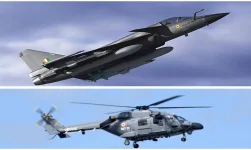
The report stressed that in the absence of international civil certifications, even technically capable platforms like the Advanced Light Helicopter (ALH) Dhruv face hurdles in penetrating markets in Europe, South America, and Southeast Asia.
Call for Bilateral Agreements
In its recommendations, the Committee has categorically stated that obtaining civil certification should not be treated as an afterthought.It has urged the Ministry of Defence (MoD) and the Ministry of Civil Aviation to move beyond preliminary studies and take immediate, concrete steps.
The panel has specifically demanded that the government negotiate formal bilateral agreements with major international certification bodies, particularly EASA.
Such agreements would streamline the recognition of Indian certification processes, reducing the time and cost required for future projects to gain global acceptance.
HAL and Ministry Response
In its defence, HAL submitted to the panel that its primary mandate remains fulfilling the requirements of the Indian armed forces.The company stated that it only pursues civil and international certification for platforms that demonstrate clear potential for the civilian market.
HAL clarified that its current Research and Development (R&D) manual has been updated to incorporate both military norms and Directorate General of Civil Aviation (DGCA) civil standards at the design stage.
Furthermore, HAL highlighted the role of its dedicated Airworthiness Group, which coordinates continuously with the DGCA and EASA to bridge regulatory gaps.
The Ministry of Defence has assured the Committee that it will examine the feasibility of strengthening bilateral ties with key international certification authorities.
The Ministry aims to leverage the diplomatic and regulatory channels of the Ministry of Civil Aviation to accelerate approvals for future indigenous aircraft and helicopter programmes.