- Views: 1K
- Replies: 2
The ambitious Franco-German-Spanish Future Combat Air System (SCAF/FCAS) project has effectively collapsed, prompting France to shift its focus towards an independent, step-by-step strategy for its aerospace future.
Rather than trying to revive the fractured multinational partnership, Paris is now banking on the advanced Rafale F5 standard as an intermediate solution.
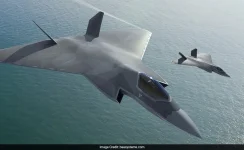
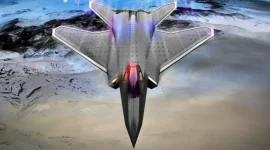
Following this, France aims to fly a national future fighter demonstrator by 2031 or 2032, paving the way for a fully operational sixth-generation combat aircraft in the 2040s.
This independent trajectory will have a direct and significant impact on how the Indian Air Force (IAF) manages its own airpower and its existing Rafale fleet in the coming decades.
The Fall of Europe's Joint Fighter Programme
Intended to be Europe's premier sixth-generation fighter initiative, the SCAF programme officially crumbled in mid-2026 after failing to secure a contract for Phase 2 development.Tensions had been brewing for years over industrial leadership, technology sharing, and differing national requirements.
For instance, France required a jet capable of aircraft carrier operations and nuclear strike missions—needs that did not align with Germany's military priorities.
The breaking point, however, was a fierce industrial dispute. Dassault Aviation was supposed to lead the New Generation Fighter design, but a relentless power struggle with Airbus over workshare and authority blocked the project from moving to the prototype stage.
Ultimately, French President Emmanuel Macron and German Chancellor Friedrich Merz mutually agreed to terminate the manned fighter portion of the project, though they may salvage some digital elements like the networked "combat cloud".
Bridging the Gap: The Rafale F5 Standard
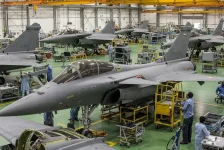
To manage the transition, France is heavily investing in the Rafale F5 standard.To finance this upgrade and its accompanying combat drones, the French government delayed the delivery of 20 current-generation Rafales, pushing their arrival from the early 2030s to 2033–2034.
The F5 is not just a routine software patch; it is a comprehensive overhaul. Open-source intelligence indicates it will feature a completely reworked airframe, advanced secure fibre-optic data networks, and a closed digital architecture to safeguard sovereign nuclear capabilities from cyber threats.
Expected to enter active service in 2033 and mature by 2035, the F5 will also boast the Safran M88 T-REX engine, which provides a 20 percent thrust increase, reaching approximately 88.2 kN.
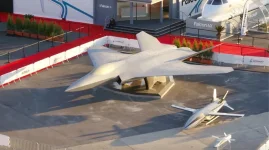
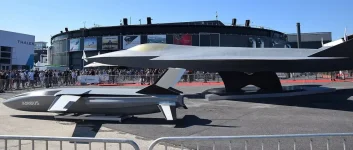
Furthermore, it will operate alongside a stealthy unmanned combat aerial vehicle (UCAV)—a "loyal wingman" heavily based on Dassault's successful nEUROn demonstrator, bringing cutting-edge artificial intelligence and low-observable characteristics to the battlefield.
A Sovereign Sixth-Generation Demonstrator
Moving beyond the Rafale, Dassault Aviation is currently in talks with the French government to build a homegrown future fighter demonstrator, aiming for a maiden flight between 2031 and 2032.Dassault’s CEO, Éric Trappier, has made it clear that this initiative will proceed as a purely French endeavour, assuming the government commits before upcoming elections.
While France remains open to foreign partners, Trappier insists that Dassault must retain clear industrial leadership—a strict condition designed to avoid the very disputes that destroyed the SCAF agreement.
Recent updates to French military planning laws also mandate the development of a national combat demonstrator by 2035.
While specifics like the aircraft’s final shape, name, or internal weapons bay configurations are yet to be finalised, the groundwork for a sovereign stealth fighter is firmly in motion.
Looking Towards the 2040s
France is operating on a strict timeline. A fully capable replacement for the Rafale must be ready by 2040, or 2045 at the absolute latest, to maintain France's airborne nuclear deterrent.The French Navy also requires this next-generation jet to equip its future aircraft carrier.
Despite the collapse of the multinational effort, Dassault remains confident. If the national demonstrator stays on schedule, the company believes a fully operational sixth-generation jet can still be delivered by 2040, proving that French industry has mastered all the necessary cutting-edge technologies on its own.
Strategic Implications for the Indian Air Force
These developments are highly relevant to India. Earlier in 2026, the Indian Ministry of Defence expressed a strong desire for the IAF to partner in a major global sixth-generation fighter programme.With the trinational SCAF now fractured, a purely French roadmap offers a much clearer and more realistic avenue for Indian involvement. This shifting landscape aligns closely with several key Indian defence priorities.
First, the IAF is grappling with a severe shortage of combat aircraft, currently operating only 29 squadrons against a mandated minimum of 42. This urgent capability gap means India cannot afford to wait decades for unproven conceptual jets.
The newly announced Rafale F5, which will be available from 2033, presents a realistic and timely option to bolster India's aerial strength far sooner than any theoretical sixth-generation platform.
Second, India already possesses a robust and expanding foundation of Rafale jets. With 36 aircraft already in service with the IAF, an order for 26 Rafale-M jets for the Indian Navy, and the ongoing push for 114 more fighters under the MRFA tender, the Rafale is central to India's defence strategy.
The emergence of the F5 standard means India's current F4-standard jets do not have to be a technological dead end. Instead, Indian military planners can eventually upgrade their growing fleet to F5-equivalent capabilities, keeping the aircraft highly potent through the 2040s.
Third, there are excellent industrial synergies between France and India. India's Gas Turbine Research Establishment (GTRE) recently selected France’s Safran to co-develop a 110–120 kN turbofan engine for the Advanced Medium Combat Aircraft (AMCA) Mk2.
With ground tests expected around 2031 and production targeted for 2035, India's engine development timeline perfectly mirrors France's schedule for its own demonstrator and the Rafale F5. This creates a unique opportunity for both nations to pool their technological resources.
Finally, an independent France may prove to be a much better partner for India's long-term aerospace ambitions. Free from the complex political compromises required by the former SCAF partnership, Dassault is now openly inviting reliable international partners who respect its design leadership.
While any joint venture would still require careful negotiations over workshare, India could find it easier to collaborate directly with France on sixth-generation technologies.
Ultimately, France's decision to prioritise the Rafale F5 means that this advanced upgrade path, rather than a distant successor, will be the primary driver of India's combat aviation capability in the next decade.