- Views: 2K
- Replies: 2
As the Indian Ministry of Defence (MoD) prepares to issue the long-awaited Request for Proposal (RFP) for the Medium Transport Aircraft (MTA) programme, the Russian defence industry has signalled a strong intent to re-enter the competition.
Officials from Rosoboronexport, Russia’s state intermediary for military exports, have confirmed they will conduct a detailed examination of the Indian Air Force’s (IAF) requirements.
Moscow aims to propose a platform that directly addresses previous technical concerns, positioning itself against Western competitors in the race to replace India's ageing transport fleet.
Addressing the "Ghost" of the Past
The renewal of Russian interest comes after the collapse of the earlier Indo-Russian Multi-role Transport Aircraft (MTA) project, also known as the Il-214 programme.That initiative faltered nearly a decade ago due to sharp disagreements over design timelines, performance benchmarks, and, crucially, engine technology.
During the previous negotiations, the IAF had rejected the Russian-offered Aviadvigatel PS-90A1 turbofan engines. The primary contention was the lack of Full Authority Digital Engine Control (FADEC).
The IAF insisted on modern FADEC standards—similar to Western engines like the CFM56 or IAE V2500—which use advanced computers to manage engine performance, diagnostics, and fuel efficiency.
The PS-90A1, relying on older hydro-mechanical controls, did not meet these criteria, leading to the eventual scrapping of the potential $2.5 billion deal.
A Rosoboronexport official acknowledged this historical friction, stating to our sources: "Contention was that IAF wanted FADEC system on the engines [and] Aviadvigatel PS-90A1 turbofans didn’t have it. We offered it as an interim power for the aircraft before we developed advanced PD-14M... Engine won’t be an issue now."
The New Solution: PD-14M Engine
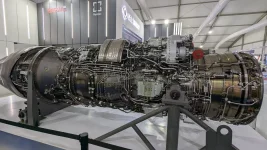
To bridge this technological gap, Russia is now putting forward the PD-14M engine. Developed by the United Engine Corporation (UEC) and unveiled in 2023, the PD-14M represents a significant leap over its predecessors.Unlike the older PS-90 series, the PD-14M is a modern high-bypass turbofan equipped with a fully digital FADEC system. Key features of the new proposal include:
- Thrust: Capable of producing approximately 18 tonnes of thrust.
- Efficiency: A claimed 15% reduction in fuel burn compared to previous generations.
- Reliability: An overhaul interval of roughly 10,000 hours, promising lower lifecycle costs.
Russian officials assert that this engine will integrate seamlessly with Indian requirements and can be offered for co-production with private Indian firms.
Strategic Competition and 'Make in India'
The upcoming RFP aims to find a single platform capable of replacing two distinct aircraft types in the IAF inventory: the tactical An-32 and the heavier Il-76 strategic transporter.Russia faces stiff competition from established global players who are also eyeing India’s airlift requirements, including:
- Airbus: Offering the A400M Atlas.
- Lockheed Martin: Pitching the C-130J Super Hercules.
- Embraer: Likely to offer the C-390 Millennium.
To sweeten the deal, Moscow is reportedly prepared to offer significant Transfer of Technology (ToT). This could involve local manufacturing lines and offsets potentially worth ₹10,000 crore, covering related technologies such as simulators and Unmanned Aerial Vehicles (UAVs).