- Views: 2K
- Replies: 28
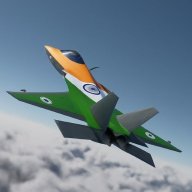
Discussions between New Delhi and Moscow regarding the purchase and domestic manufacturing of the Su-57E fifth-generation stealth fighter are progressing rapidly.
Recent reports and statements suggest the talks have moved into a highly advanced phase. Russia has tabled an extensive proposal that promises the swift delivery of fully assembled jets to India, followed by large-scale production within the country under a technology transfer agreement.
This comes after Russian President Vladimir Putin publicly reaffirmed the offer during the St. Petersburg International Economic Forum in June 2026, offering joint production with "no limitations."
According to officials, the current plan aims to supply the Indian Air Force (IAF) with an initial batch of 36 to 60 ready-to-fly Su-57E aircraft. This move would provide India with an immediate fifth-generation stealth capability to counter regional developments.
Following this first phase, manufacturing would shift to Indian factories under a licensed production deal. The strategy seeks to quickly modernise the IAF's combat fleet while strongly supporting India's ambition to build a self-reliant domestic defence industry.
Sources confirm that the dialogue is mature, with Moscow having shared extensive technical data on the fighter's performance with the IAF.
Russia is reportedly showing great flexibility in meeting India’s demands, especially regarding the transfer of critical technology and local industrial involvement.
Recent statements from Hindustan Aeronautics Limited (HAL) indicate that the Russian Defence Ministry has even offered full access to the aircraft's source code, a rare and highly valuable concession in global defence agreements.
In addition to setting up local assembly lines, Moscow has proposed co-developing a customised twin-seater version of the Su-57 designed specifically for the IAF’s tactical needs.
The deal also opens the door for manufacturing Russian aerial weapons in India, along with the integration of homegrown Indian systems like the BrahMos-A supersonic cruise missile. This ensures the jets can be heavily customised with high levels of indigenous technology and weaponry.
To prepare for potential manufacturing, Russian experts have already inspected HAL's facilities, specifically the Nashik plant, which has a long history of successfully assembling Su-30MKI fighters.
The audit concluded that roughly half of the existing infrastructure could be repurposed for the Su-57 programme with some new investments. This existing setup and workforce experience could significantly speed up the start of any future production if a final contract is signed.
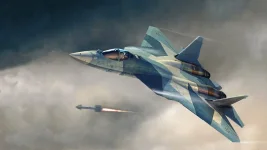
Russia is heavily promoting the Su-57E as a top-tier stealth fighter. Its design significantly reduces its radar cross-section using advanced shaping, internal bays for weapons, and special radar-absorbing coatings.
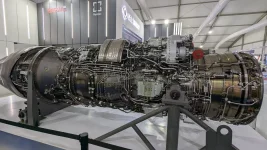
The jet features a powerful Active Electronically Scanned Array (AESA) radar, thrust-vectoring engines for high manoeuvrability, modern electronic warfare systems, and AI-assisted flight computers, making it highly effective in modern, network-enabled warfare.
Russian representatives also point out that the Su-57 has been tested in real-world combat scenarios. It has operated in complex environments heavily defended by anti-aircraft missile networks and advanced electronic jamming.
According to Moscow, this practical combat experience proves that the aircraft can perform reliably in the demanding conditions of modern warfare.
Advocates for the Su-57 note that its stealth capabilities and cutting-edge sensors would give the IAF a major technological leap over existing fourth-generation jets, whether for dominating the skies or conducting precise strikes on ground targets.
Furthermore, the aircraft's spacious internal weapon bays allow it to carry a substantial payload without compromising its stealth.
As India waits for its indigenous Advanced Medium Combat Aircraft (AMCA) to mature over the next decade, the Su-57E presents a viable option to bridge the immediate capability gap.