- Views: 1K
- Replies: 1
Recent satellite intelligence indicates that Beijing is moving its most sophisticated combat aircraft nearer to India's northern borders.
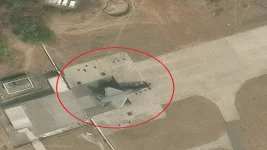
Commercial imagery captured between late June and early July by the firm Vantor reveals a total of 12 Chinese J-20 stealth fighters stationed at two key airbases.
Eight of these advanced jets were spotted at the Hotan airbase in the Xinjiang region, situated roughly 400 kilometres from Leh. An additional four J-20s were identified at the Damxung airbase in Tibet.
According to open-source defence intelligence, this marks one of the largest concentrations of China's fifth-generation fighters near Indian territory to date.
These strategic placements provide a rare visual confirmation of China’s fifth-generation aerial assets operating actively from front-line facilities facing India. The geographic coordinates of these bases carry heavy tactical significance.
The Hotan facility is located just 245 kilometres from India’s critical Daulat Beg Oldi (DBO) advanced landing ground in eastern Ladakh. Meanwhile, the Damxung base sits about 344 kilometres northwest of Tawang in the northeastern state of Arunachal Pradesh.
The Line of Actual Control (LAC) spanning 3,488 kilometres separates the two nations, stretching across the territories of Ladakh, Himachal Pradesh, Uttarakhand, Sikkim, and Arunachal Pradesh.
This visual evidence highlights a rapid shift in the aerial power dynamics along the contested frontier. Over the past few years, Beijing has heavily invested in modernising its military infrastructure across Tibet and Xinjiang.
In response, New Delhi has aggressively upgraded its own forward bases and deployed top-tier combat jets to secure its airspace.
The presence of these stealth jets indicates a new, more advanced phase in border posturing. The Chengdu J-20, widely known as the "Mighty Dragon," is a twin-engine, all-weather stealth platform built for the People's Liberation Army Air Force (PLAAF).
Having taken its maiden flight in 2011 and entering active service in 2017, the J-20 functions primarily as an air superiority fighter.
Modern defence analysis notes that the aircraft is equipped with advanced active electronically scanned array (AESA) radars and is capable of carrying long-range PL-15 air-to-air missiles, allowing it to strike targets up to 300 kilometres away.
While this deployment does not inherently mean an immediate armed conflict is on the horizon, the strategic intent is unmistakable. It demonstrates that the PLAAF is now fully capable of, and comfortable with, running highly complex aircraft operations from extreme high-altitude bases.
This operational routine provides China with a wider array of tactical choices during a potential standoff, simultaneously forcing India to continuously monitor a highly sophisticated threat.
However, aviation experts note that operating from high-altitude bases like Hotan and Damxung limits the J-20's maximum payload capacity due to the thin air, forcing compromises on either fuel or weaponry.
India's Defence Preparedness
The Indian Air Force (IAF) remains well-prepared to counter these regional developments, maintaining a robust network of primary airbases and advanced landing grounds all along the LAC.The nation's defence forces have actively prepared forward bases to manage emergencies on both western and northern fronts, regularly conducting extensive flight drills.
To match the stealth challenge, the IAF is rapidly integrating next-generation radar systems, secure communication networks, and enhanced cybersecurity defences.
To further bolster its deterrence posture, India has operationalised the formidable Russian-built S-400 air defence missile systems, which feature specialized counter-stealth tracking radars. India has also aggressively forward-deployed its own modern fleet of French-made Rafale fighter jets at strategic bases—such as Hasimara in West Bengal—to counter any hostile aerial incursions.
Diplomatic relations between New Delhi and Beijing have seen cautious attempts at normalisation in recent months. Yet, while diplomats negotiate troop disengagements on the ground, the aerial maneuvers paint a much more aggressive picture.
By positioning its most lethal air superiority assets directly on the edge of the Himalayas, China is doing more than just maintaining a posture; it is actively flexing its military muscle.
As the situation evolves, it remains critical for India's defence establishment to maintain relentless vigilance over the growing capabilities just across the border.